

Speed
 Latest
September release: AI multiplied your creators. Can your operating model keep up?
Stensul's September 2026 release lets AI agents do more campaign production through the Stensul MCP, from a Workfront brief to approved imagery, alt text, tracking and segment content. Designers can publish Figma modules to the Stensul library, and extended QA automation flags errors such as missing subject lines. Latest
The economic case for AI in your campaign creation workflow
AI speeds up drafting, but enterprise campaigns still stall between draft and launch, in review, approval, and brand and compliance checks. Stensul argues the return on AI comes from a governed creation workflow, citing customers that cut email production time by 90% and raised email-sourced qualified leads by 163%. Latest
5 signs your Salesforce creation process needs a governance layer
Five signs show a Salesforce Marketing Cloud or Pardot workflow needs a governance layer: developer-dependent builds, brand drift, broken personalization code, late legal catches and manually rebuilt dynamic content. Stensul moves governance upstream and pushes approved HTML to Salesforce in one click. Latest
Marketing Cloud email creation. Where does it actually happen?
Most delays blamed on Salesforce Marketing Cloud come from work upstream of the send: briefs, design, HTML coding, and brand and legal approvals. Stensul argues this creation layer needs one governed home, where rules are enforced during the build and approved HTML pushes to Marketing Cloud or Pardot in one click. Latest
How Xylem scaled email and landing page creation across a distributed marketing organization
After a reorg moved campaign creation to segment teams, Xylem set up self-service email and landing page creation in Stensul with three user roles, locked modules and preview-link approvals across four Marketo instances. In year one, 44+ users built 600+ emails and 20+ landing pages. Latest
The Stensul integration with Adobe GenStudio for Performance Marketing
Stensul's integration with Adobe GenStudio for Performance Marketing supplies governed templates that GenStudio's AI generates email concepts within. A chosen concept moves to Stensul for links, images and approval in Workfront, Asana or Stensul, then deploys as HTML to any MAP or ESP. Latest
The Scrutiny Cycle: Why AI is making marketing teams slower, not faster
The Scrutiny Cycle is the pattern where AI adopted without governance creates more campaign errors, errors trigger heavier review, and teams end up slower than before AI. Stensul's survey data traces each stage and argues that building governance into creation breaks the cycle. Latest
The marketing expectation gap: when speed mandates outpace the systems behind them
Stensul's MarTech Governance Outlook, a survey of 300+ US and UK marketers, finds 47% of teams are measured on speed while 53% lack comprehensive AI governance. AI speeds drafting but not approvals, errors bring heavier review, and governed teams sustain higher campaign volume. Latest
Fortune 500 fintech company reimagines campaign creation
A Fortune 500 financial software company moved from agency-led email production, with creative, brand, legal and ops reviews, to distributed creation in Stensul with brand and compliance rules built into a master design system. Production time fell 52%, from about three weeks to about ten days. Latest
Your AI marketing strategy is just a draft strategy
Most enterprise AI marketing strategies speed up drafting, not campaigns. Delays sit in brand review, legal validation, formatting and approvals, so more AI drafts can lengthen time to launch. AI accelerates whole campaigns only when brand and compliance standards guide content as it is created. Latest
Common marketing creation bottlenecks
The five most common marketing creation bottlenecks are over-reliance on specialists, endless review cycles, disconnected tools, brand and compliance checks that come too late, and AI without guardrails. They persist because creation isn't safe to distribute, and they ease when guardrails are built into the workflow. Latest
Why speed without governance is breaking enterprise marketing
AI speeds up drafting, but enterprise campaigns still stall because design, coding, QA and approvals depend on the same few specialists, who now validate far more work. AI output has no value until it is production-ready, so governance has to be built into creation rather than enforced afterwards. Latest
The anatomy of a broken workflow
Enterprise campaign workflows break at handoffs between teams, late brand and legal reviews, reliance on a few specialists, scattered feedback, and scale that adds risk. Most were designed for lower output and centralized teams. A governed model builds guardrails into creation instead of adding review steps. Latest
Salesforce Marketing Cloud tips and tricks that actually save time
Salesforce Marketing Cloud teams save time by setting a default login app, building CloudPages externally, using Code Snippet Blocks for AMPscript, using Einstein send-time optimization, A/B testing beyond subject lines and using Business Units. Stensul adds governed email creation with one-click upload to SFMC. Latest
Introducing, Governed Creation™
Governed Creation™ is the creation operating model behind Stensul's platform, announced in January 2026. It embeds brand, compliance and quality guardrails into email and landing page creation so more people can create safely, AI can speed work within the rules, and review cycles shrink. Latest
Your marketing bottleneck isn’t headcount. It’s the process.
Stensul argues most marketing bottlenecks come from a broken creation process, so hiring won't fix them. When senior marketers spend hours on templates and approvals, campaigns that should take days take weeks. Built-in governance and automated production let an existing team create emails and landing pages in hours. Latest
If you can’t launch in hours, you’re already behind
Stensul argues that teams needing days or weeks to launch a landing page miss market windows, run fewer tests and lose pipeline. Launching in hours depends on modular components, embedded governance and MAP and CRM integration, and it gives teams more campaigns and shorter feedback loops. Latest
Where time really goes: the hidden cost of landing page creation
Stensul applies its SPEED framework to landing pages and finds that most delay comes from handoffs, review loops, rework, tool switches and waiting on dependencies, not creative work. It estimates that saving 8 hours on each of 50 pages a year reclaims 400 hours that can go into more campaigns and tests. Latest
The invisible approval tax: how much landing pages really cost ops
The approval tax is the hidden cost of repeated landing page review cycles. Stensul estimates that 50 pages a year at four two-hour rounds each take 400 hours, over $60,000 at $150 an hour, and argues that template-level approval, locked zones and built-in review reduce that to a light check.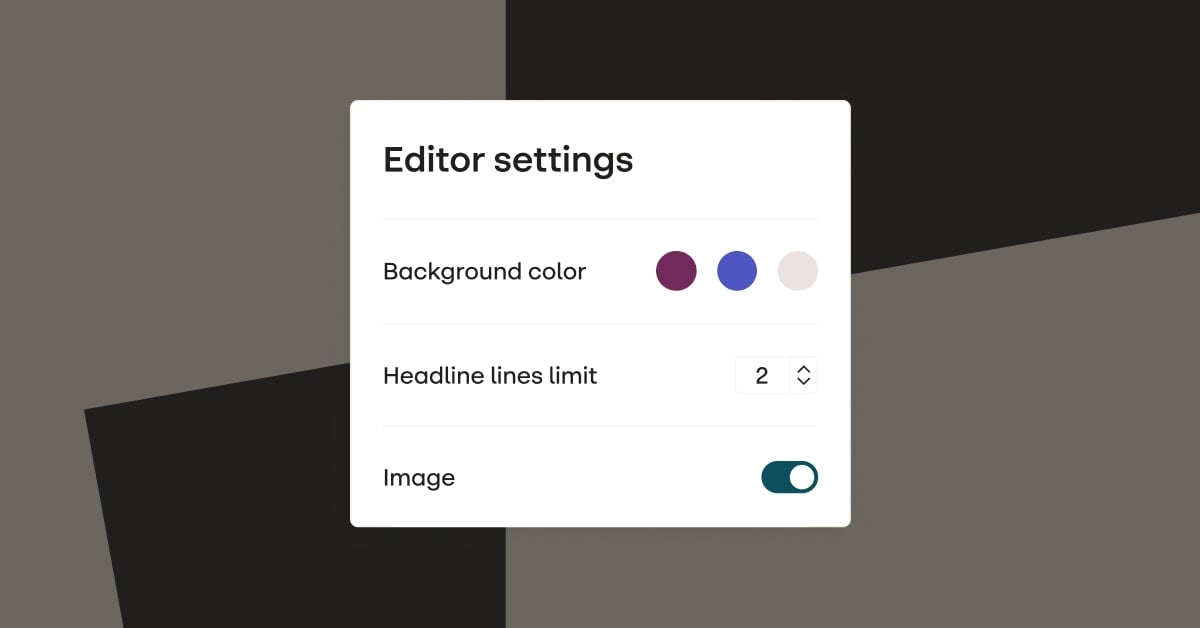 Latest
Why landing pages break your workflow, and how to fix it
Landing pages often sit outside the core marketing workflow, with separate tools, manual handoffs, version confusion and governance gaps that slow launches and hide status from marketing ops. Stensul argues Governed Creation fixes this by building pages and emails in one place, with guardrailed templates and approvals. Latest
The always-on campaign engine: how marketers can build, launch, and learn at speed
An always-on campaign engine uses reusable modules, connected email and landing page journeys, real-time iteration and built-in A/B testing so a team never starts a campaign from scratch. Stensul contrasts traditional landing page builds of 3–5 days each with launching and testing variants in hours.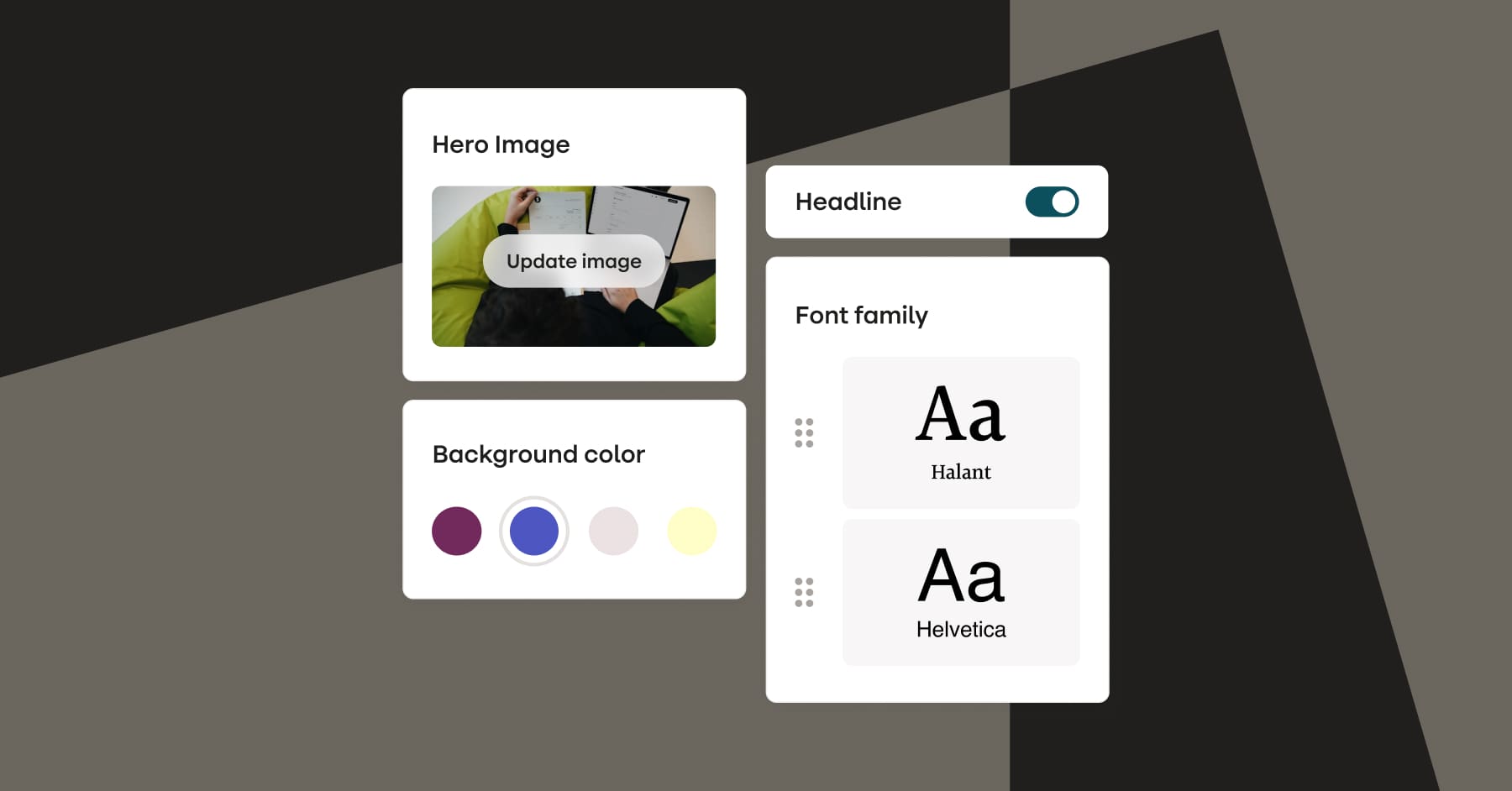 Latest
When you control the process, you can control (and deliver) the outcome
Stensul argues that marketing operations leaders get reliable campaign outcomes by designing the workflow to enforce brand, compliance and quality rules automatically. With those rules built into creation, more people can work in parallel safely and Ops spends less time firefighting late reviews and rework. Latest
The role of AI and automation in improving campaign velocity
Stensul argues that AI and automation raise campaign velocity only inside a modernized creation operating model with built-in governance. It defines velocity as speed plus direction and power, and recommends mapping the current workflow with the SPEED framework to find bottlenecks. Latest
Collaboration with governance: Bring your marketing teams together to create better emails faster
Stensul argues that email creation stays slow because specialists work in silos with single-purpose tools, and that collaboration with built-in governance fixes it. It lists nine features to look for in a creation platform and cites a financial services team that cut email builds from weeks to hours. Latest
Stensul integrations: Supercharging email creation with the tools you already use
Stensul connects email creation to tools teams already use: Figma for design modules, Wrike for workflow, and ESPs and MAPs such as Salesforce Marketing Cloud, Braze, Marketo Engage and Eloqua for one-click deployment. Pre-tested modules and in-platform approvals cut manual QA and handoffs between tools. Latest
Top 10 pain points holding back your marketing operations
Stensul lists ten common marketing operations pain points, including slow email builds, developer dependence, fragmented martech, hard-to-scale personalization and risky compliance reviews. It traces them to outdated creation operating models and offers the SPEED framework to diagnose a team's workflow. Latest
Reinventing campaign creation in the age of AI
Generative AI speeds up drafting, but campaigns still take two to four weeks because creation operating models were built for hand-coded email. Drawn from a 2025 Gartner Marketing Symposium keynote, the SPEED framework maps the workflow, finds and costs bottlenecks, adds AI where it pays and sets guardrails.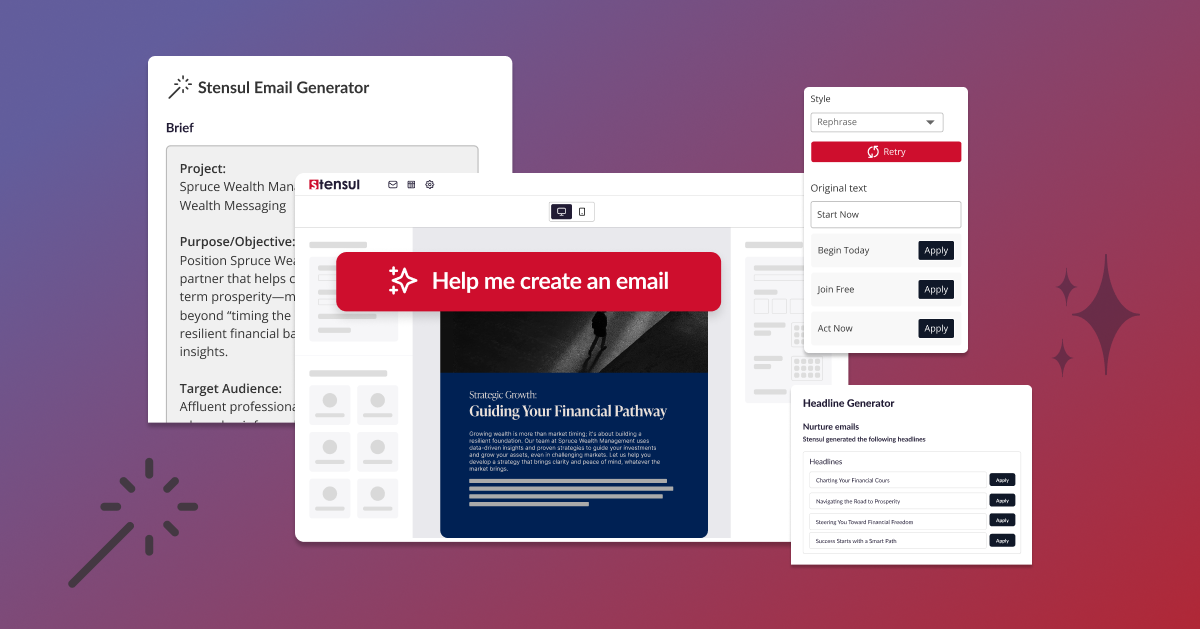 Latest
Stensul AI expands powerful new enterprise AI features to accelerate email creation
Stensul added an Email Generator to Stensul AI in June 2025. Users pick a pre-approved template, paste a campaign brief and get a full first draft, with subject line, preheader and body copy, inside brand guardrails. A Text (Re)Generator and generators for titles, CTAs, images and alt text handle edits. Latest
Unlock campaign velocity with the SPEED framework
The SPEED framework is Stensul's audit for finding where a team's creation operating model slows campaigns down. Stensul argues that legacy operating models can't absorb AI safely, and that automated guardrails let people create production-ready assets faster without breaking brand rules or best practices. Latest
Marketing to one: How high-performing teams actually pull off personalization (without losing their minds)
Personalization at scale depends on clean data, one shared workflow for campaign creation, and AI used for first drafts rather than final copy. Takeaways from a Stensul and Sercante webinar also warn against overbuilt dynamic content and cite Accolade, Bisnow and Enlyte as teams that made it work. Latest
How highly regulated organizations can add agility and speed to their email marketing
Stensul argues that financial institutions can speed up email marketing without risking compliance by changing process, technology and people together: modular email design, one collaborative platform with guardrails and auditable approvals, and staff freed from managing reviews. A typical email takes 21 days. Latest
What is your marketing team’s Creation Operating Model?
A creation operating model is how a marketing team structures people, process and technology to go from idea to output. Stensul names three common models, Distributed, Design-to-Code and Brief-to-Template, each trading speed against control, and argues all need built-in guardrails to scale as AI raises volume. Latest
Why legacy marketing workflows are holding back FinServ marketing teams—and what to do about it
Legacy workflows at banks, insurers, credit unions and financial associations rely on rigid handoffs, siloed tools and specialists. Stensul cites the American Bankers Association, which cut email production from 5–7 days to 1–2 days, and argues pre-approved templates and role permissions keep faster work compliant. Latest
A proven framework to boost campaign creation speed
Stensul argues that AI speeds up content ideas but not campaign creation, because the work still moves through fragmented, manual workflows. The framework names creation, collaboration and governance bottlenecks and answers them with no-code building, feedback on the asset itself, and automated guardrails. Latest
Unlocked: 4 ways MOPs can thrive with an unblocked content supply chain
An unblocked content supply chain lets marketing operations teams spend less time on manual builds and more on segmentation, testing and analysis. Stensul cites the Milwaukee Bucks, who cut email creation time by 50% and sent 36% more non-requested campaigns, and World Vision Canada, which went from weeks to hours. Latest
FinServ marketers can speed up campaigns (without risking compliance)—here’s how
Financial services marketers can shorten approvals without risking SEC, FINRA or CFPB violations by building compliance into creation. The post names three needs: pre-approved templates and lockable blocks with standard disclaimers, role-based permissions with audit trails, and automated review routing. Latest
Unlocked: 4 things designers can do with an unblocked content supply chain
An unblocked content supply chain gives designers back time spent fixing templates, solving design-to-code issues and policing the brand. Stensul lists four gains: stronger emails and landing pages, faster iteration with real-time previews, more creative time, and consistency from standardized logos, fonts and colors. Latest
Explainer: What is a content supply chain and why should enterprise marketers care about it?
A content supply chain is the structured process that moves marketing content, such as emails and landing pages, from ideation to distribution. Stensul explains why these chains are often slow, costly and inconsistent, and how to fix one: audit the process, align goals with creation, then pick the right tools. Latest
The future of the content supply chain for marketers
Stensul argues the future content supply chain rests on three pillars: AI-driven automation and personalization, integrated agile workflows, and governance with built-in guardrails. With only 35% of organizations expecting a 2025 budget increase (Forrester), it treats efficiency as essential for marketing teams. Latest
5 best practices for creating a winning landing page
Five landing page best practices are fast loading, a simple layout with clear visual hierarchy, a strong headline, short and relevant copy, and a clear call to action. Stensul adds that how pages get built matters too, since slow, fragmented workflows limit how often teams can launch and test. Latest
EL PAÍS uses Stensul to democratize email creation
EL PAÍS journalists build newsletters in Stensul, inside brand guardrails and connected to Adobe Campaign, without waiting on designers or developers. Production is 10x faster, each send needs 66% fewer people, and the paper launched 3x more newsletters. Latest
How to build your ideal campaign ecosystem with Stensul + Salesforce Marketing Cloud
A connected campaign stack builds on-brand emails in Stensul, routes reviews and sign-off through a work management tool such as Workfront or Asana, and pushes approved emails into Salesforce Marketing Cloud folders and business units. The result is fewer handoffs, consistent branding and personalization that scales. Latest
Mastering personalized email marketing: scaling up without losing the personal touch
Email personalization stalls at scale because specialists must script dynamic content for every segment, in each ESP's own language. The post lists ten hurdles, from fragmented data to privacy rules, and explains how reusable conditional logic presets let non-technical builders apply segments without new code. Latest
MINDBODY finds a way to make email creation stress-free
MINDBODY moved from hand-coded email to distributed creation in Stensul, with brand and regulatory rules programmed in, single-screen review and Slack approvals. Monthly output rose from 10–15 emails to about 400, and creation time per email fell from 2–4 hours to about 15 minutes. Latest
The MarDreamin' team finds Stensul passes its real-world marketing creation test with flying colors
Sercante's volunteer team, which builds email for the MarDreamin' virtual conference, moved creation from the Account Engagement builder into Stensul, with QA, rendering and accessibility checks at the start of the build. Time per email fell nearly 30% from a 4.5-hour baseline, twice the team's goal. Latest
A business advocacy group changed email creation from confusing to coherent for more effective initiatives
A Washington, DC business federation let a dozen committees and nine councils keep creating email, with Stensul as the central control point: locked templates, programmed brand rules and early automated QA. Creation time fell from 4.5 hours to 48 minutes, and authorized creators doubled from 50 to 100. Latest
A SaaS company went from "drop everything" for one email campaign to "do it all strategically and easily"
A SaaS company selling an ABM platform replaced outsourced HTML consultants with in-house email building in Stensul. Creation time fell from about 20 hours to about 30 minutes per email, output rose 5x without new headcount, and the consultant budget moved to other programs.
Nothing matches that mix yet.
Make the move to agentic AI for email marketing.
We’ll show you how large enterprises are using Stensul to adapt their AI operating model, and ship more campaigns, with better results.
Request a demo