The future of the inbox: Ogilvy’s rules for AI email (Martech World Forum 2026)

Manlio Carrelli’s Martech World Forum 2026 talk: AI now reads, summarizes and acts on email before people do. He carries David Ogilvy’s rules (respect the reader, be informative, sell, keep testing) into the AI inbox and adds a fifth: if you can’t trust it, you can’t ship it.

  1. Title slide: The future of the inbox. David Ogilvy would probably love this. Manlio Carrelli, CEO, Stensul.
  2. The future of the inbox: Ogilvy would probably love this, beside a photo of David Ogilvy with his pipe.
    2 / 43

    Hello everyone. I’m Manlio Carrelli, CEO of Stensul. Today I want to talk about the future of the inbox, and how David Ogilvy, the king of advertising from the Mad Men era, would love where AI is taking us.

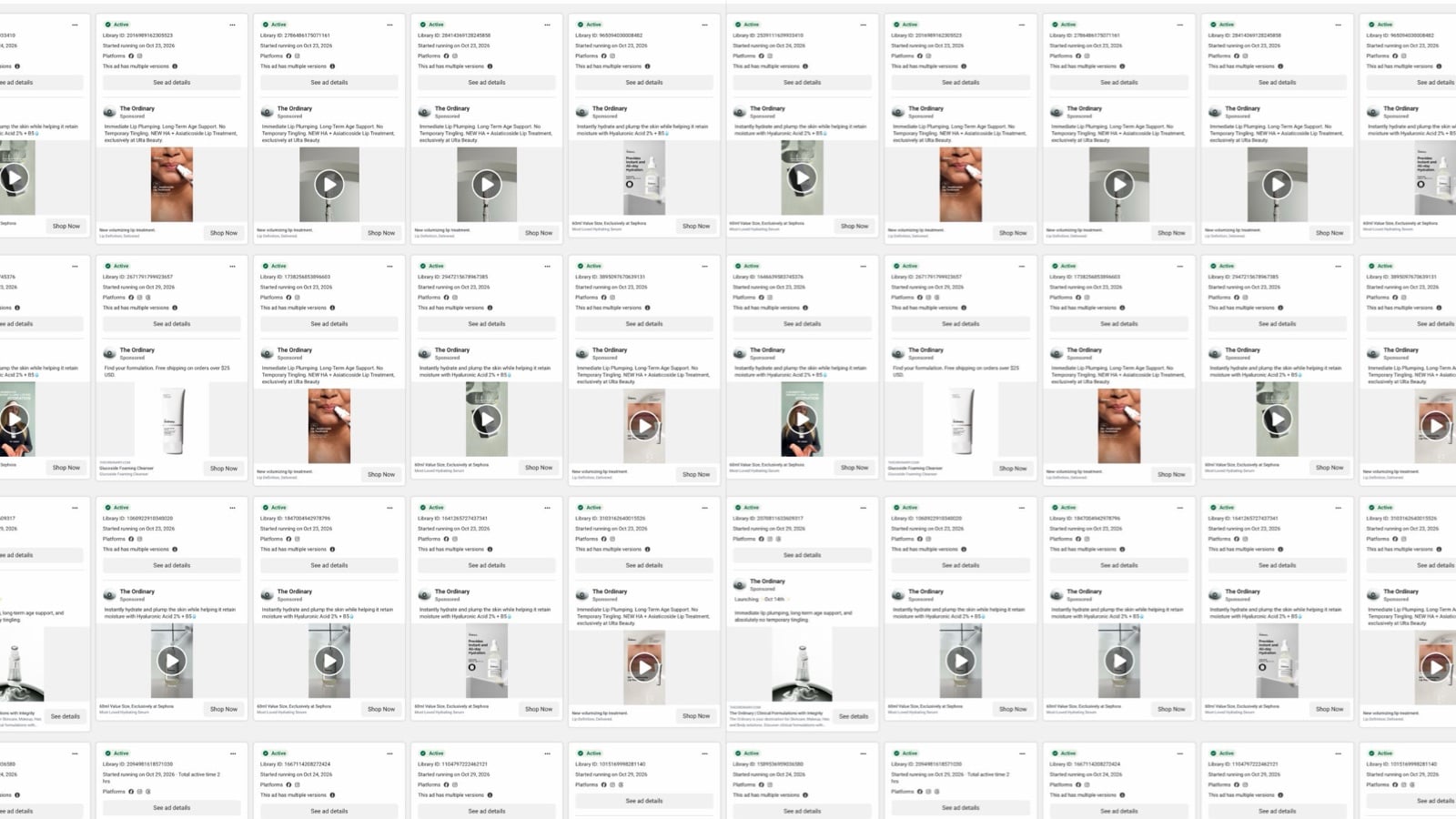
  3. A wall of hundreds of ad variants for the same products, laid out in a grid.
    3 / 43

    Advertising had its big AI moment years ago. Thousands of variants, constantly tested and personalized.

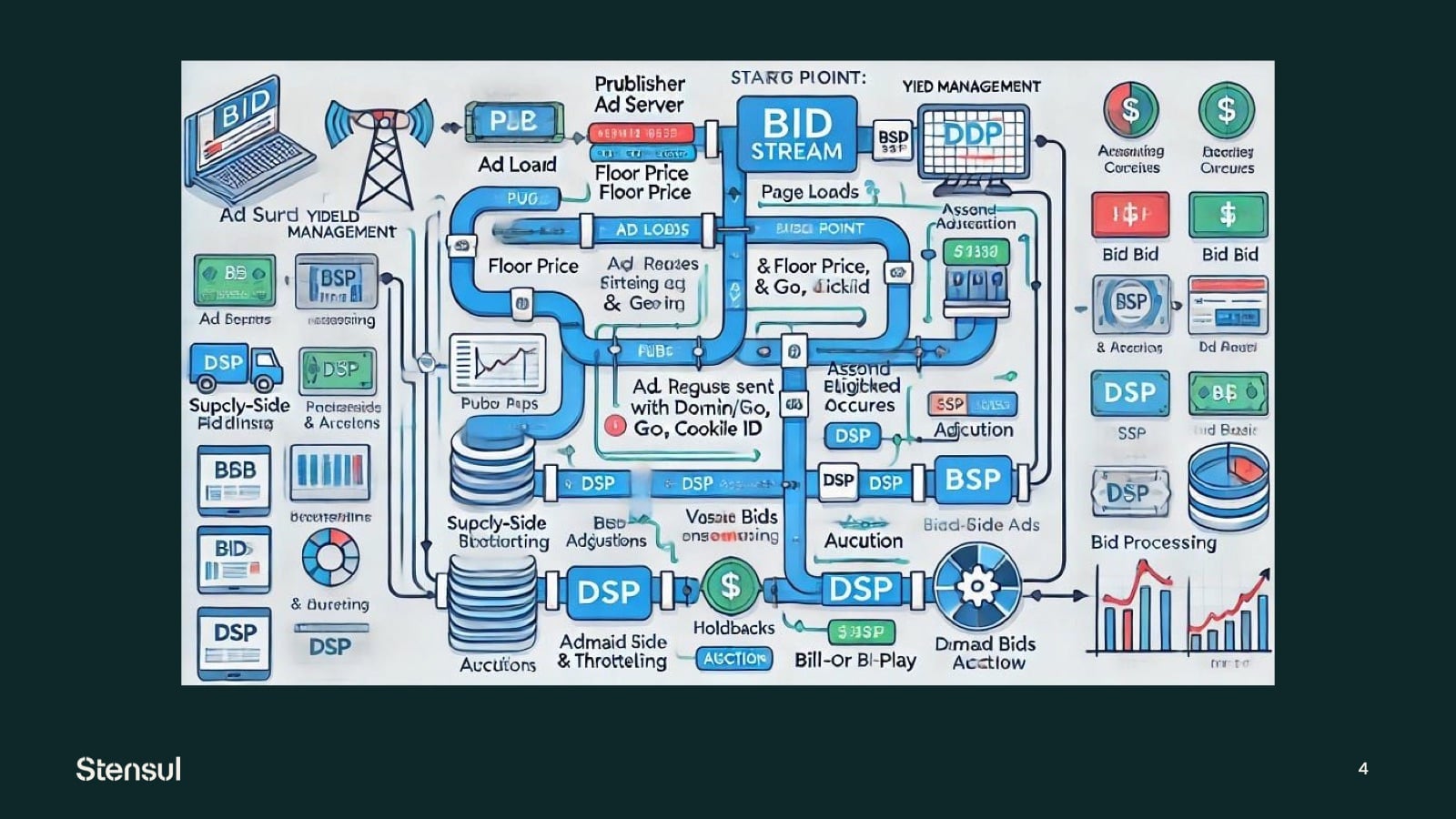
  4. Diagram of the programmatic ad stack: ad servers, DSPs, SSPs, bid streams and auctions, all automated.
    4 / 43

    Across the whole ad stack, machines now make the calls. It’s operating at huge scale.

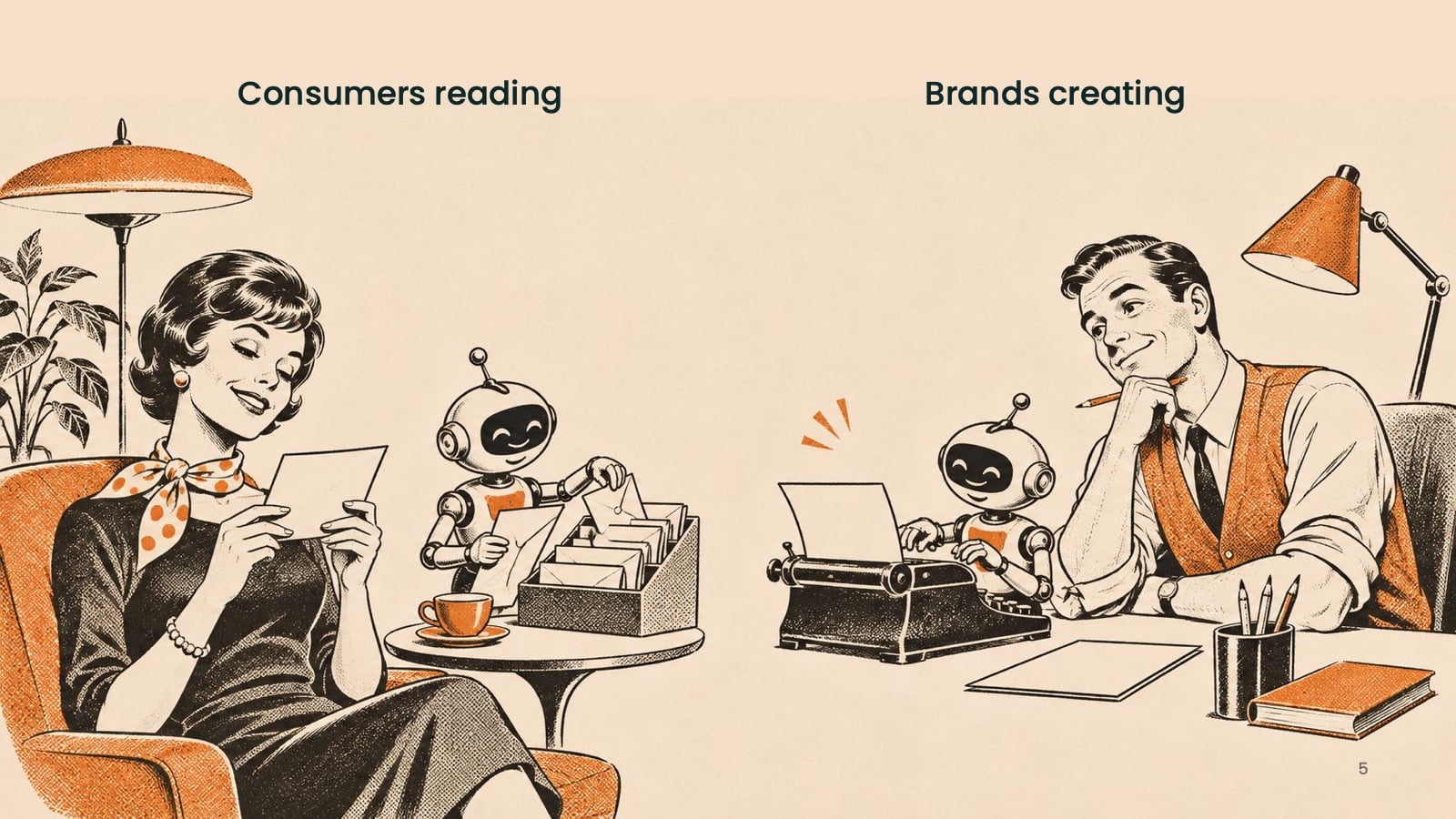
  5. Illustration: a woman reading email with a robot beside her (consumers reading) and a man at a typewriter with a robot (brands creating).
    5 / 43

    Now that shift is coming to email. AI is changing how consumers read it and also how brands make it.

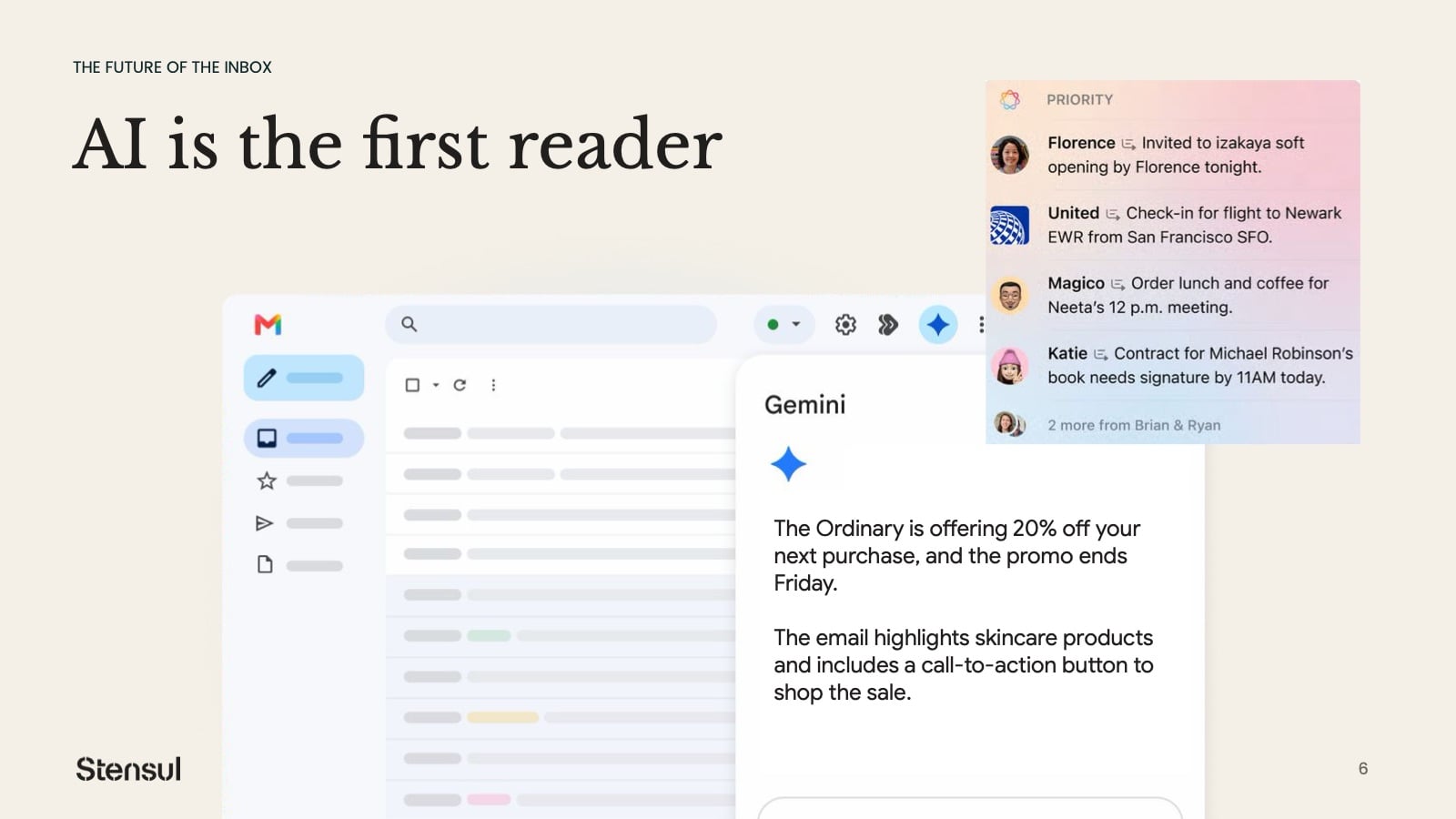
  6. AI is the first reader: Gemini in Gmail sums up a promotional email from The Ordinary in two lines.
    6 / 43

    Gmail and Apple Mail summarize your email. AI has a growing role in what people notice.

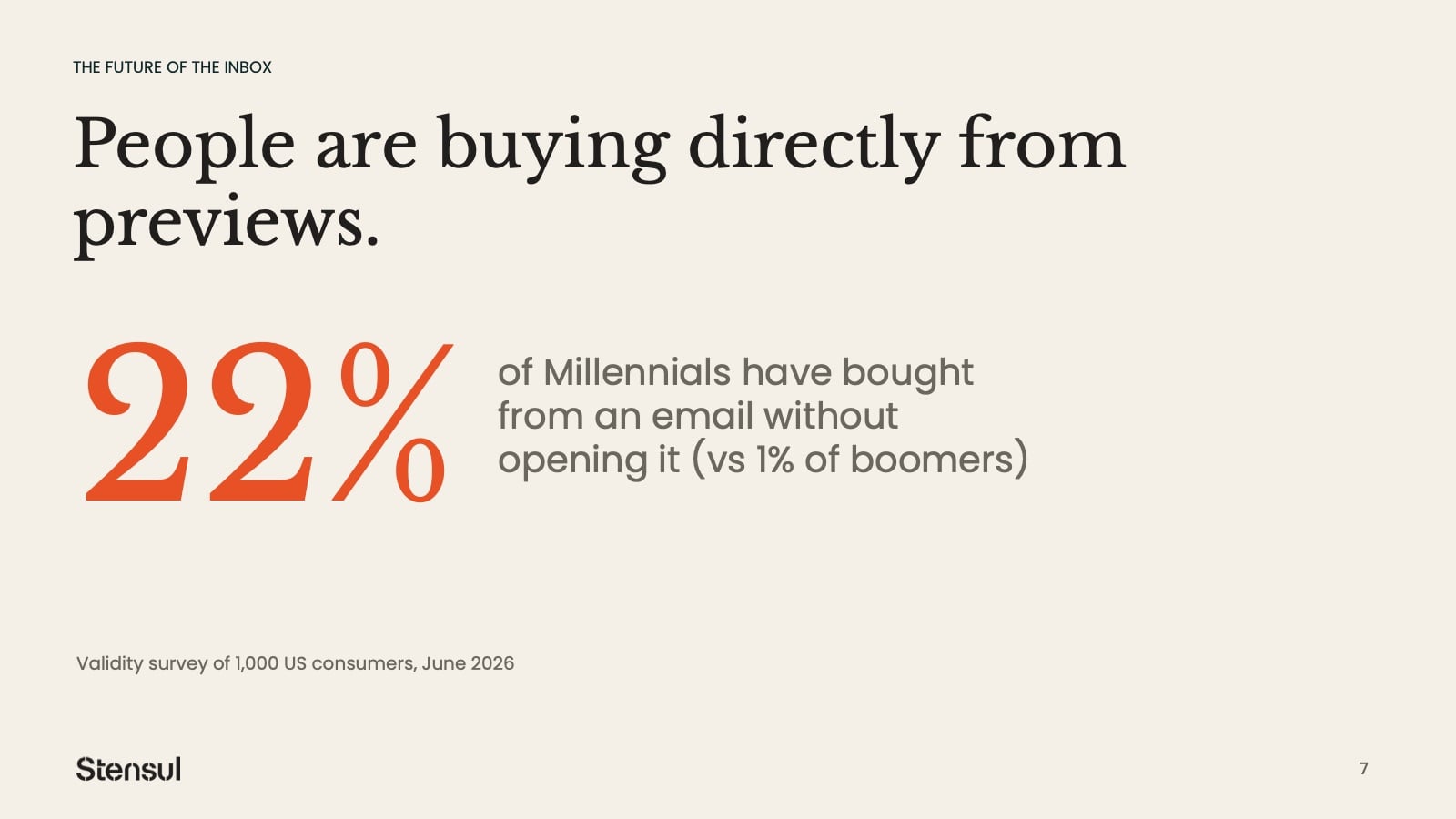
  7. People are buying directly from previews: 22% of millennials have bought from an email without opening it (vs 1% of boomers). Validity survey of 1,000 US consumers, June 2026.
    7 / 43

    The summary isn’t just a preview. Sometimes it’s a purchase decision. 22 percent of millennials have bought something from an email they never opened.

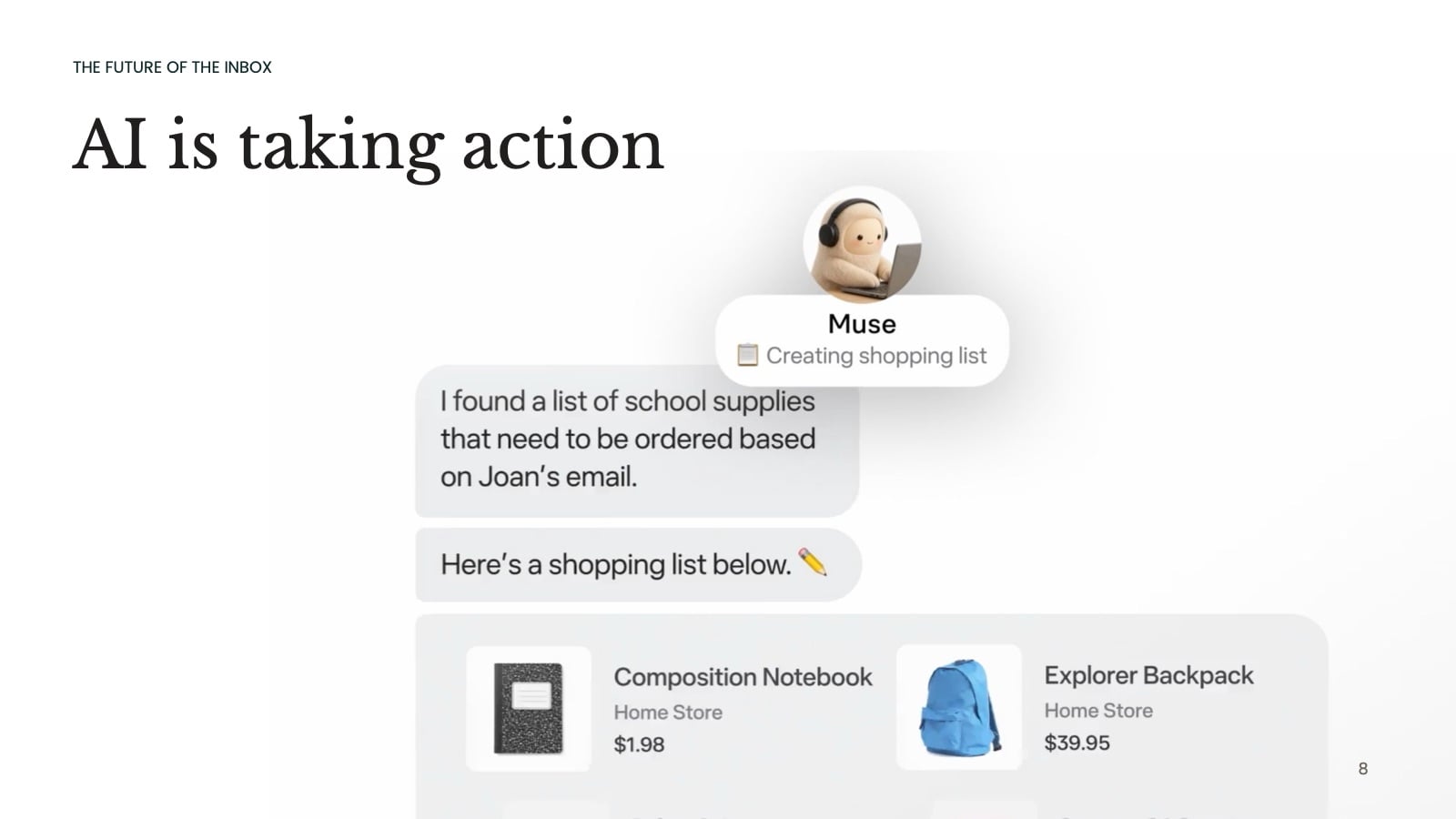
  8. AI is taking action: the agent Muse reads Joan’s email about school supplies and builds a shopping list of products to order.
    8 / 43

    And now, with agents like Muse, AI chooses which emails your consumers see. It’s acting AND buying on their behalf.

  9. A lot is changing. But what won’t change?
    9 / 43

    When the world around me is changing fast, I like to ask: what WON’T change. What are timeless principles that will be more important than ever? That’s what you can build a strategy on.

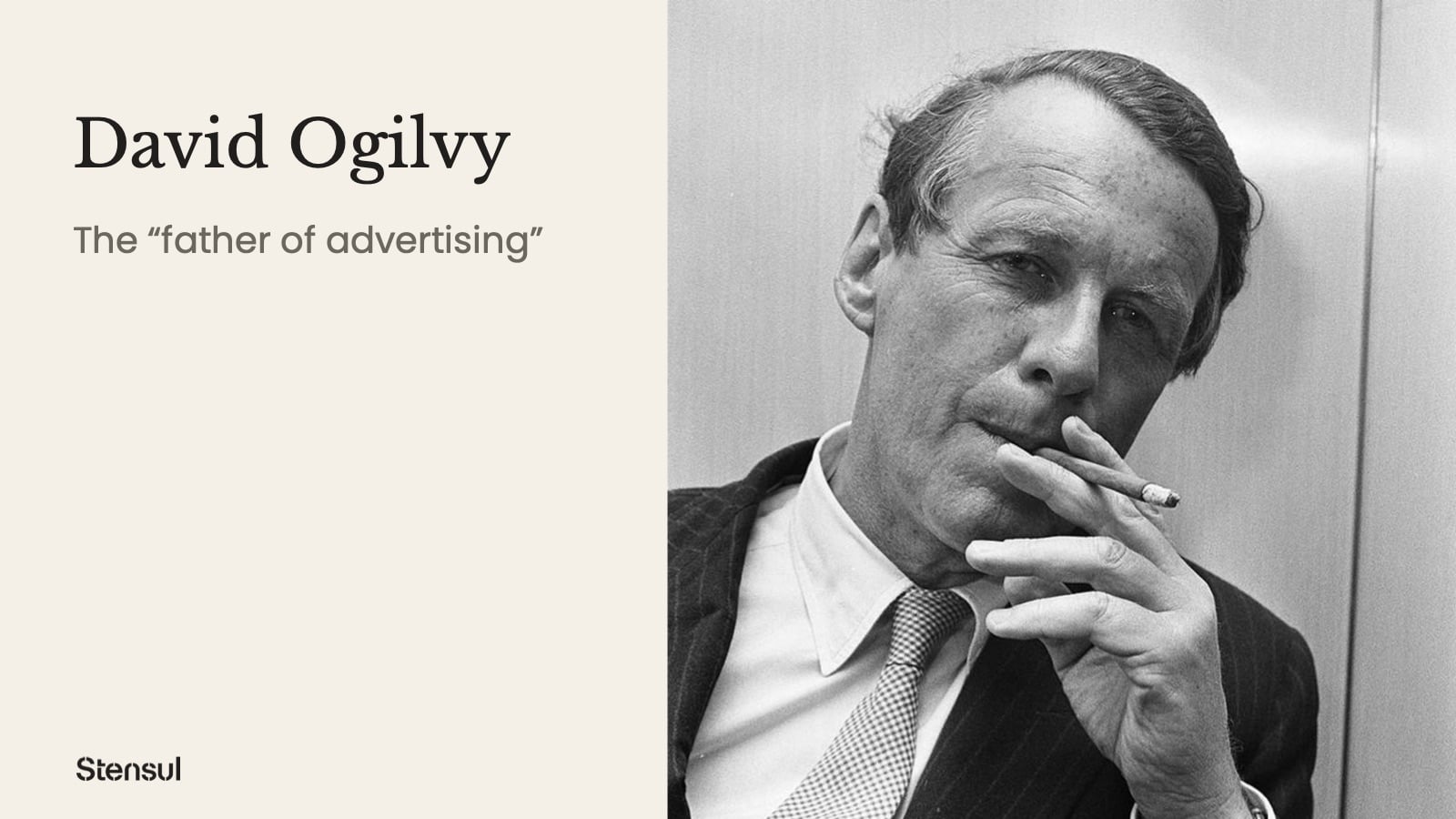
  10. Photo of David Ogilvy, the “father of advertising”.
    10 / 43

    For this, we turn to David Ogilvy.

  11. The most iconic ads in history: a row of Ogilvy’s ads, among them the Guinness Guide to Cheese, the Hathaway man with an eye patch, Dove and Rolls-Royce.
    11 / 43

    He made some of the most legendary ads of all time.

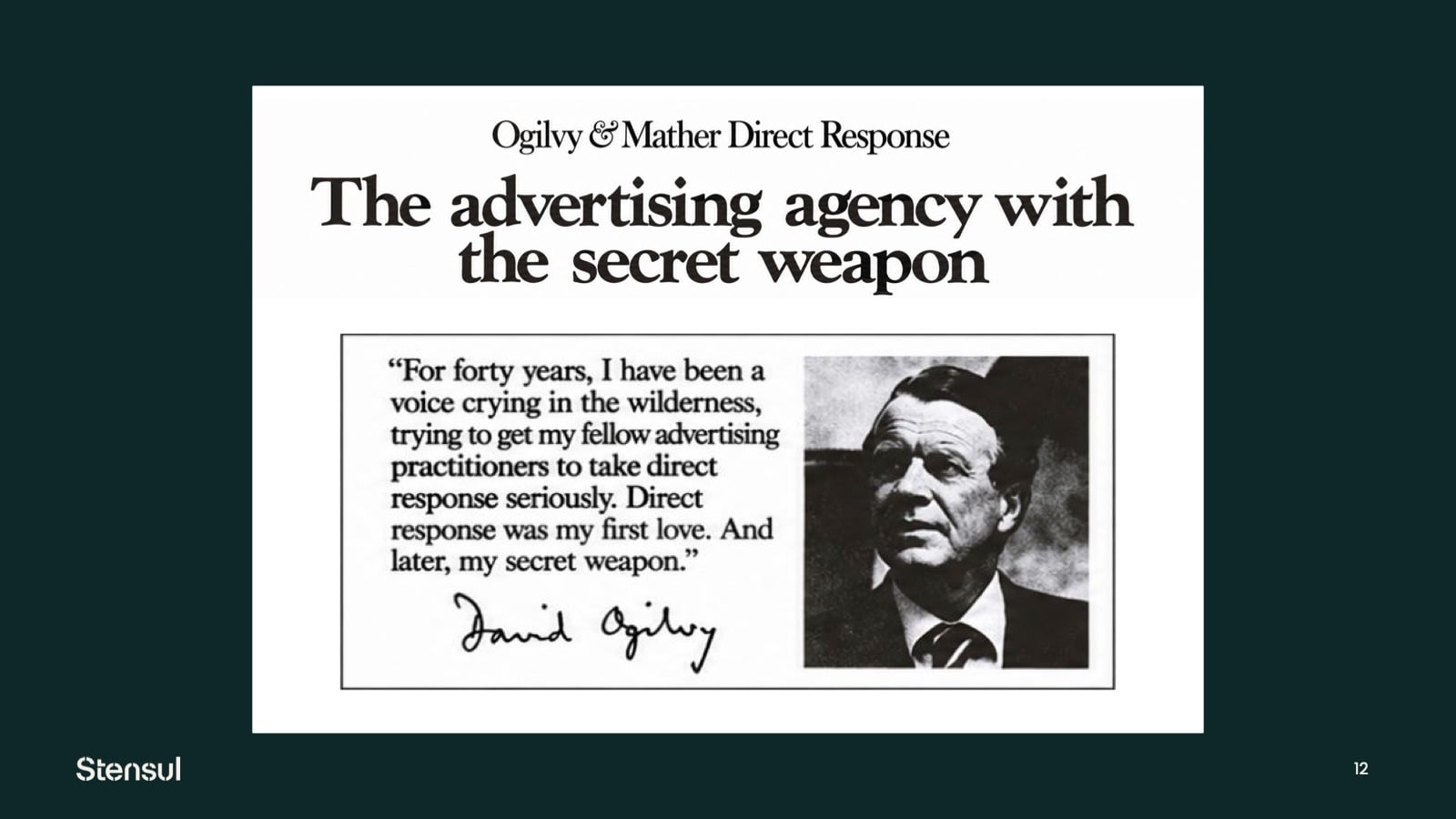
  12. Ogilvy & Mather Direct Response ad, “The advertising agency with the secret weapon”, quoting Ogilvy: direct response was his first love and, later, his secret weapon.
    12 / 43

    Ogilvy called direct mail his “first love and secret weapon.” It was the email marketing of his time, and that makes his principles extra-relevant for the future of the inbox. Let’s take his rules one at a time.

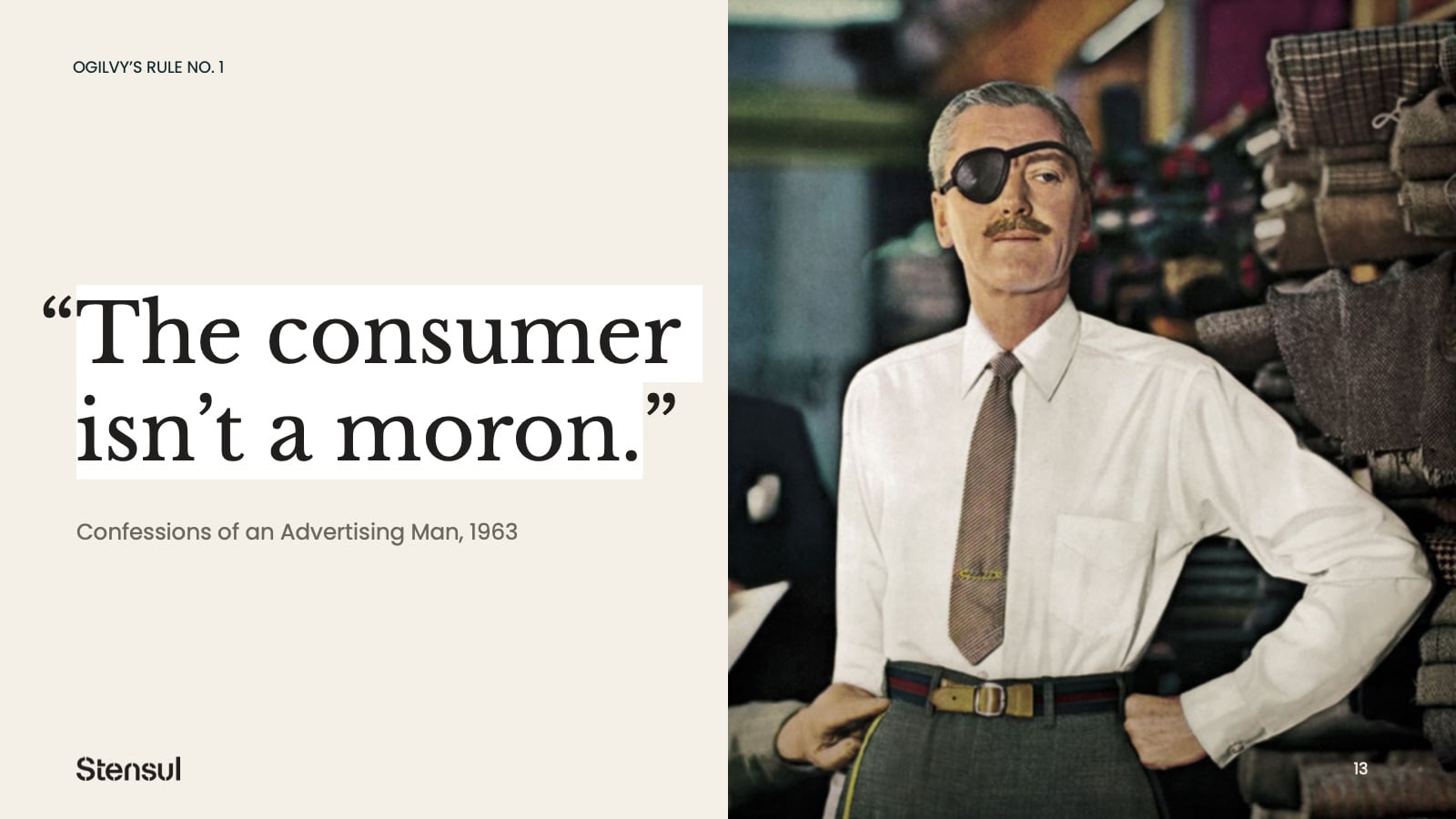
  13. Ogilvy’s rule no. 1: “The consumer isn’t a moron.” Confessions of an Advertising Man, 1963. Beside the Hathaway man ad.
    13 / 43

    Rule number one. “The consumer isn’t a moron.” They’re your spouse, your sibling, your best friend. You’re creating for a human being you know and respect.

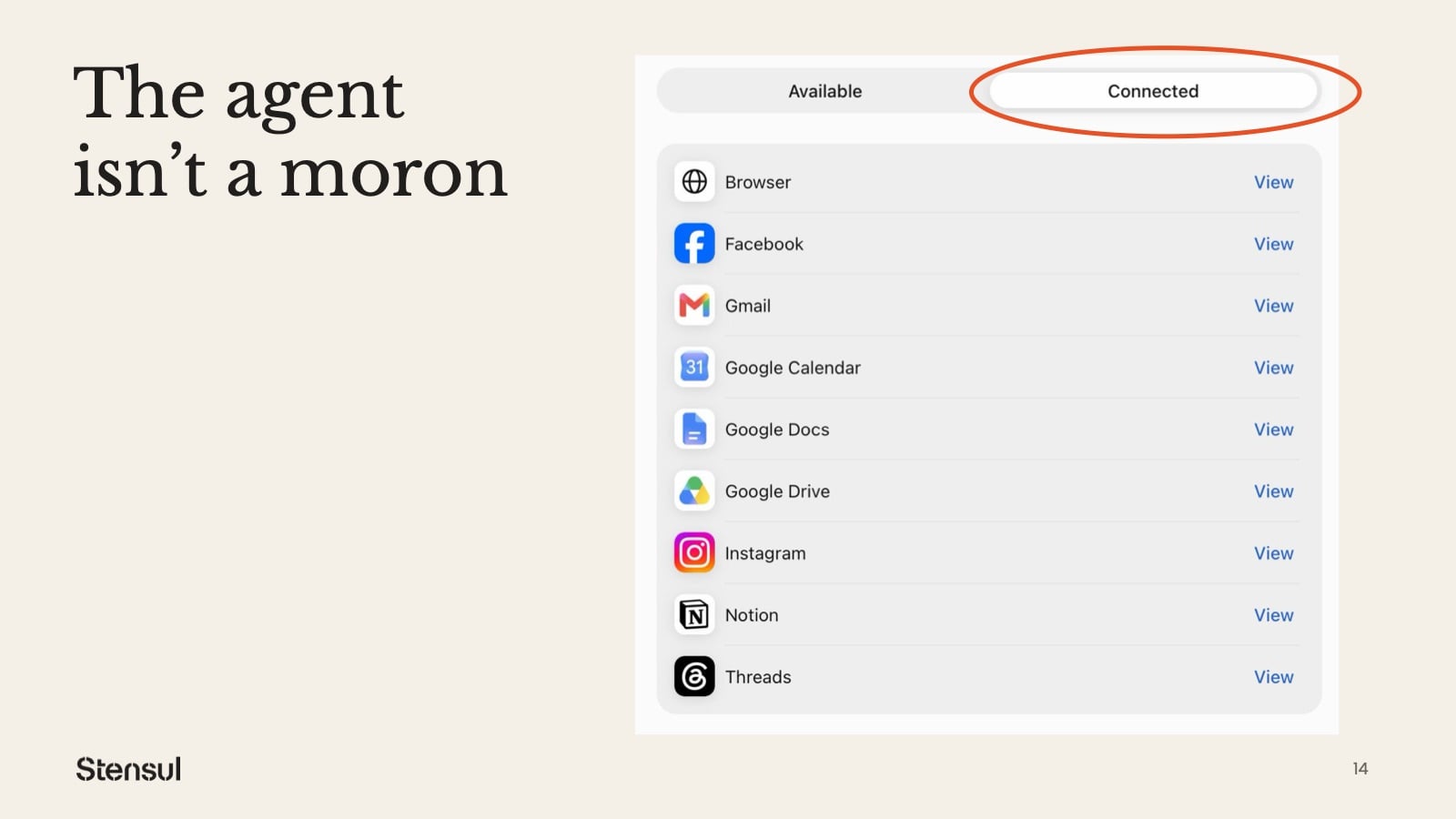
  14. The agent isn’t a moron: the apps a consumer has connected to an AI agent, including the browser, Gmail, Google Calendar, Google Docs, Google Drive, Instagram and Notion.
    14 / 43

    Now we need to add: The agent isn’t a moron. They know your customer intimately. Everything they buy, everything they do. So respect that.

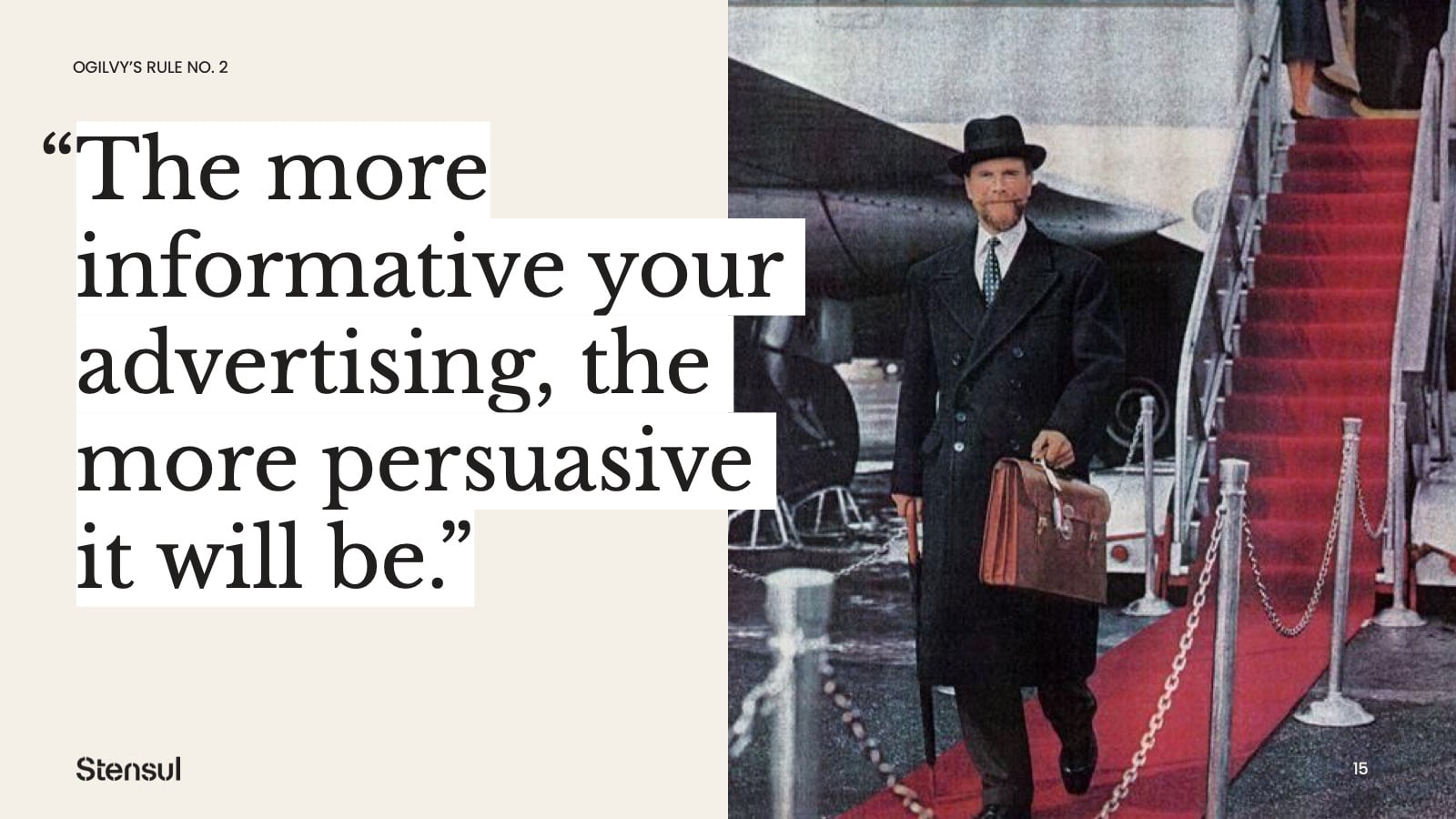
  15. Ogilvy’s rule no. 2: “The more informative your advertising, the more persuasive it will be.”
    15 / 43

    That brings me to rule number two. The more informative your advertising, the more persuasive it will be. The way to win is timely, personal, relevant content.

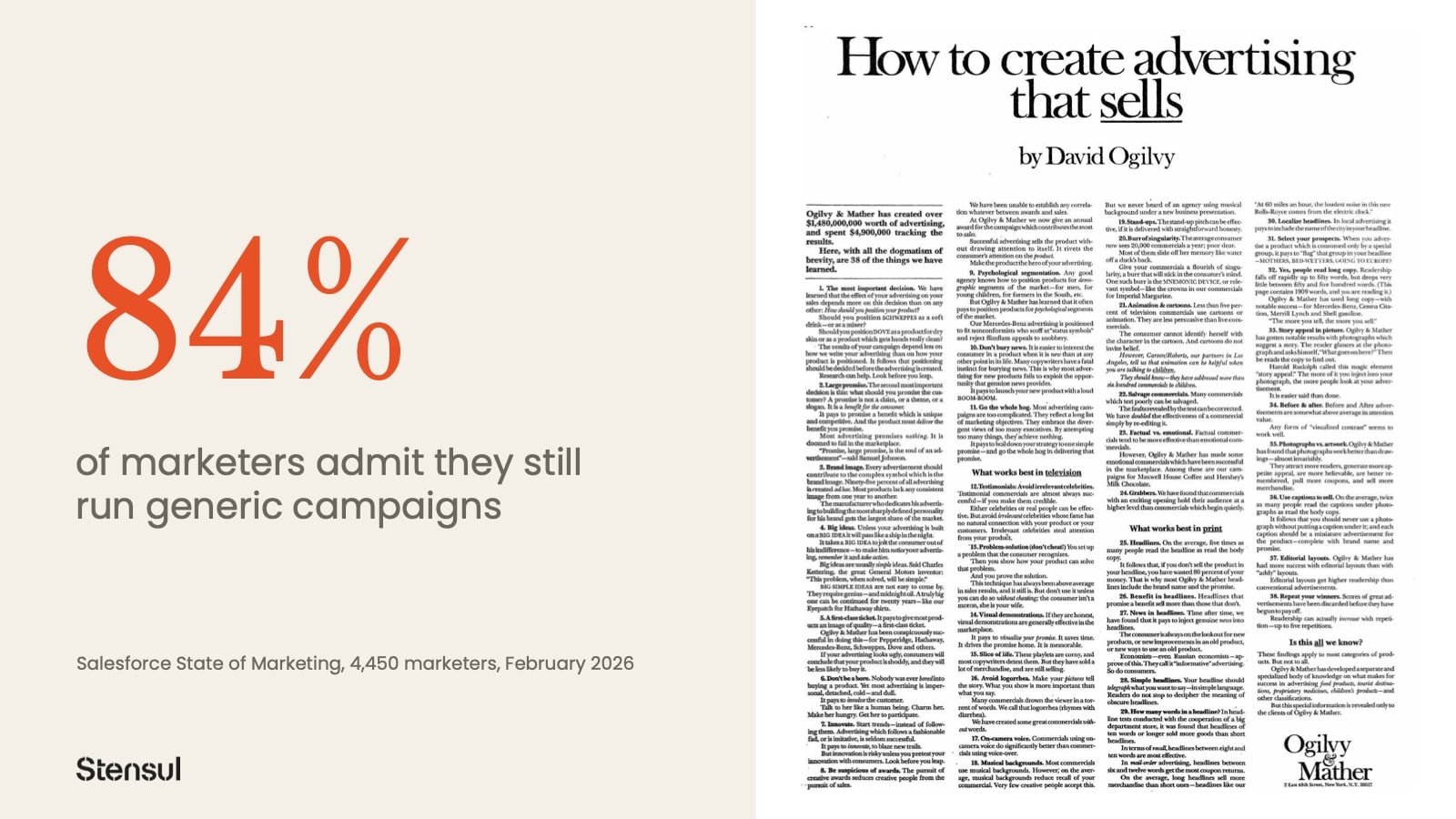
  16. 84% of marketers admit they still run generic campaigns. Salesforce State of Marketing, 4,450 marketers, February 2026. Beside Ogilvy’s long-copy ad “How to create advertising that sells”.
    16 / 43

    But even with all the latest AI and digital technologies, 84% of marketers still run generic campaigns.

  17. Rule no. 2, informative beats clever: Our most personal email?
    17 / 43

    Now we do know 1-to-1 email is possible. In fact, most all of you are doing it today… Can you guess what that is?

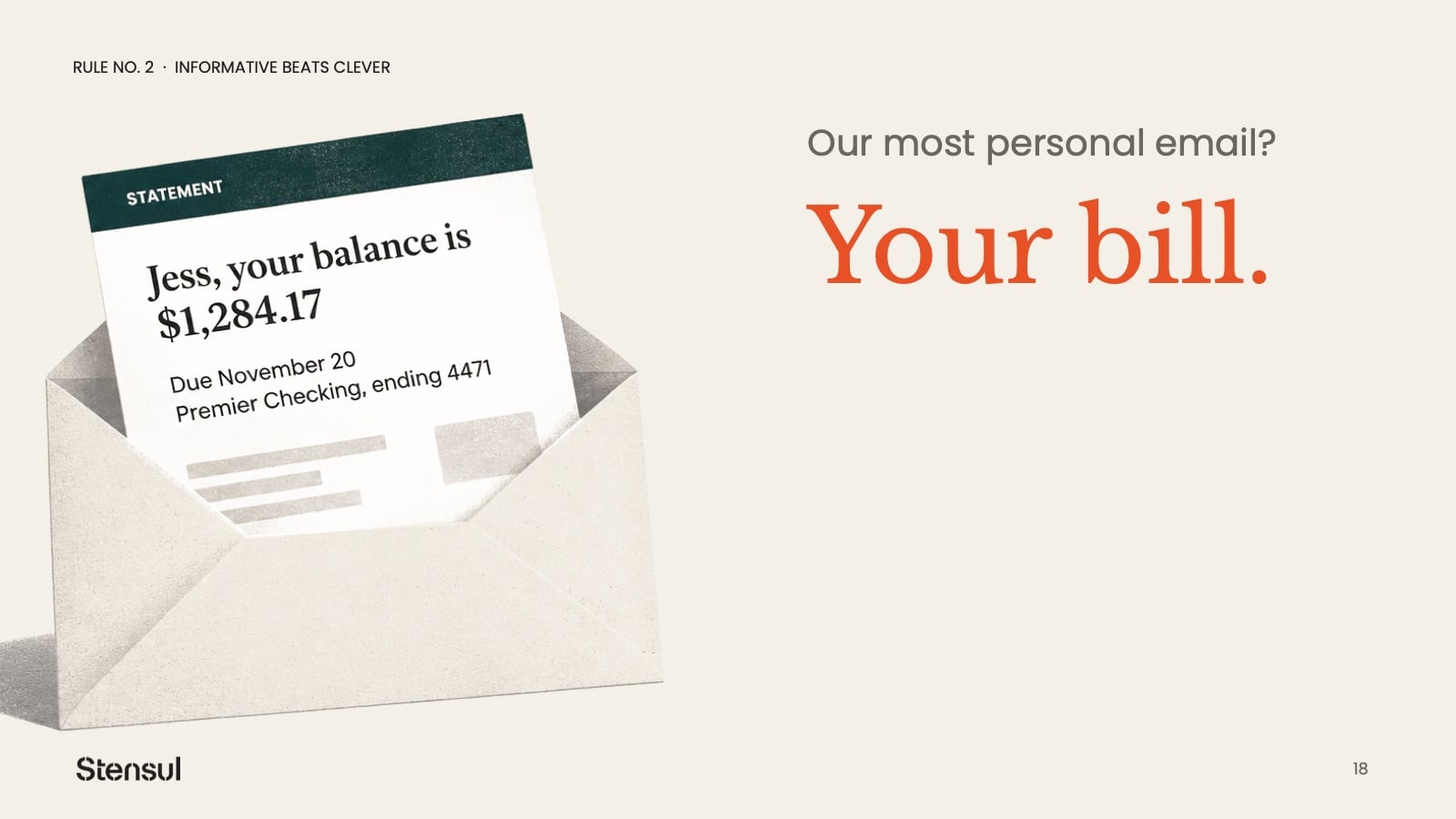
  18. Our most personal email? Your bill: a statement email reading “Jess, your balance is $1,284.17”.
    18 / 43

    It’s your bill. It knows your name, your services and what you owe. And it’s important to you. Imagine we could extend that 1:1 to more places. In a moment I’ll show you how to get started.

  19. Ogilvy’s rule no. 3: “We sell, or else.” The agency’s motto, beside an ad for Campbell’s beef broth.
    19 / 43

    But first, rule number 3: “We sell, or else.” Ogilvy didn’t care how good it looked if it didn’t sell.

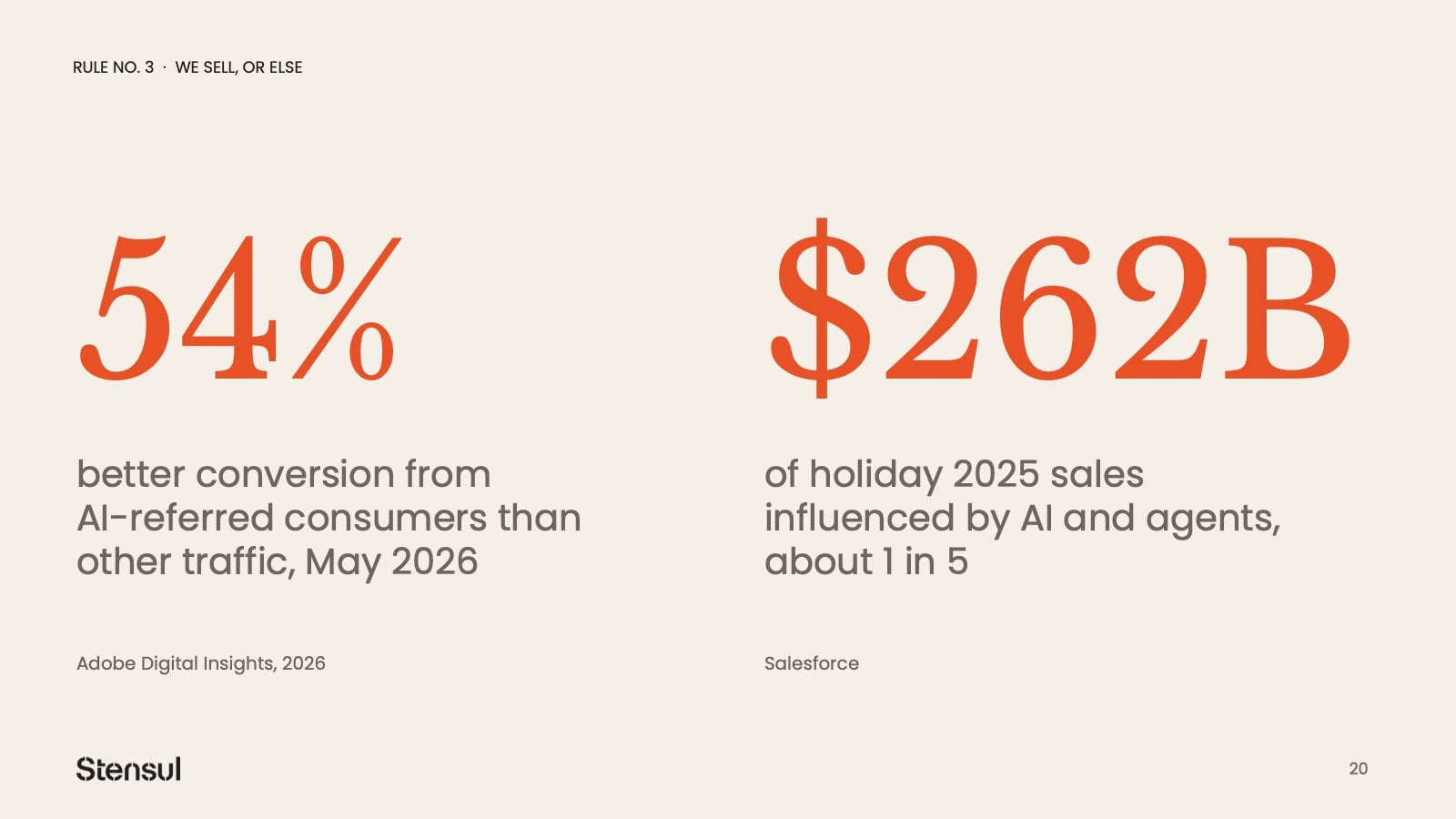
  20. 54% better conversion from AI-referred consumers than other traffic, May 2026 (Adobe Digital Insights). $262B of holiday 2025 sales influenced by AI and agents, about 1 in 5 (Salesforce).
    20 / 43

    Reaching your customer’s agents can help you sell. Even last year, AI influenced 1 in 5 dollars in holiday sales.

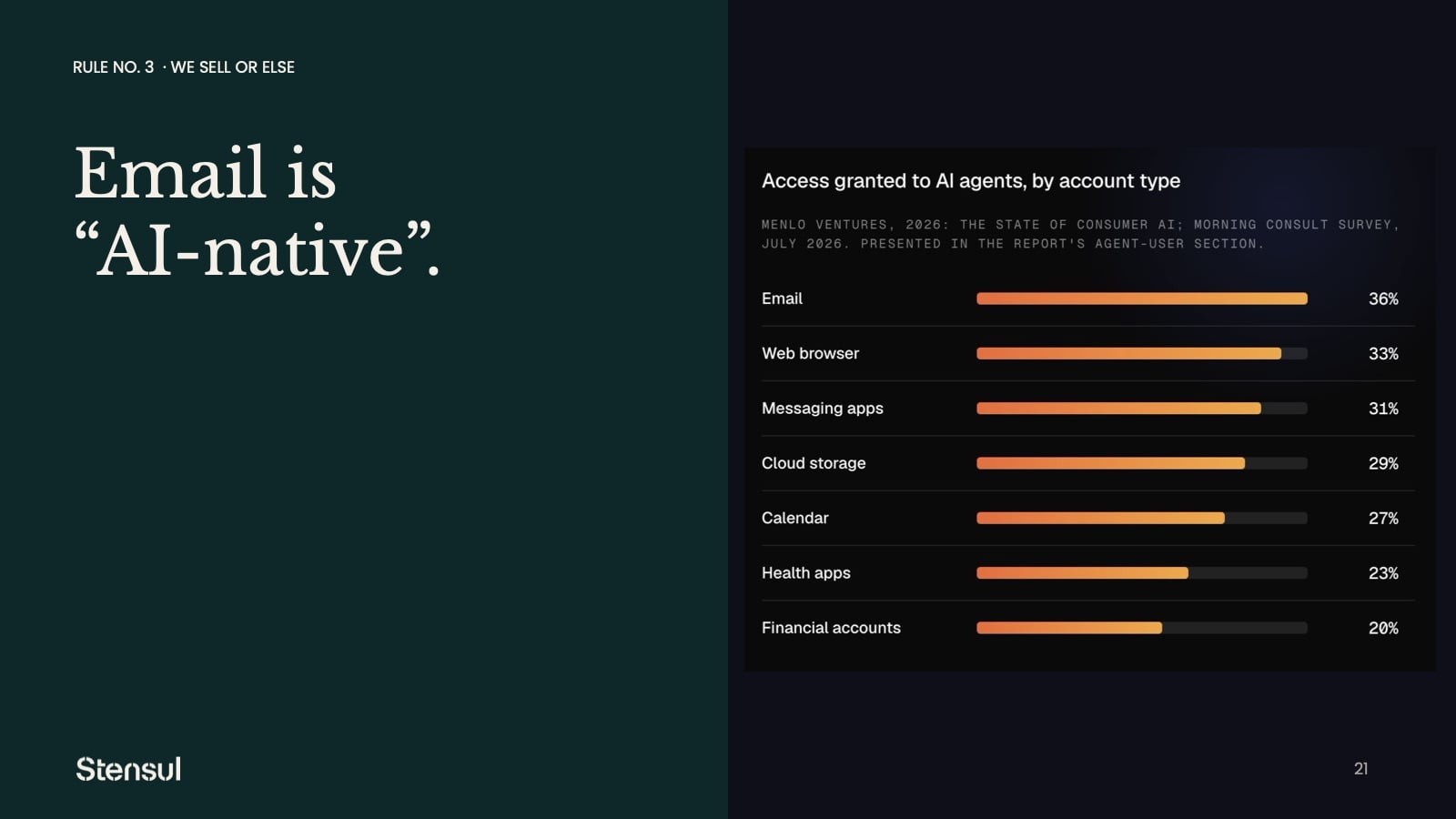
  21. Email is “AI-native”: a chart of access granted to AI agents by account type, with email first at 36%, ahead of the web browser and messaging apps.
    21 / 43

    Email is easy for agents to read and track, and it’s the #1 tool consumers give their agents access to.

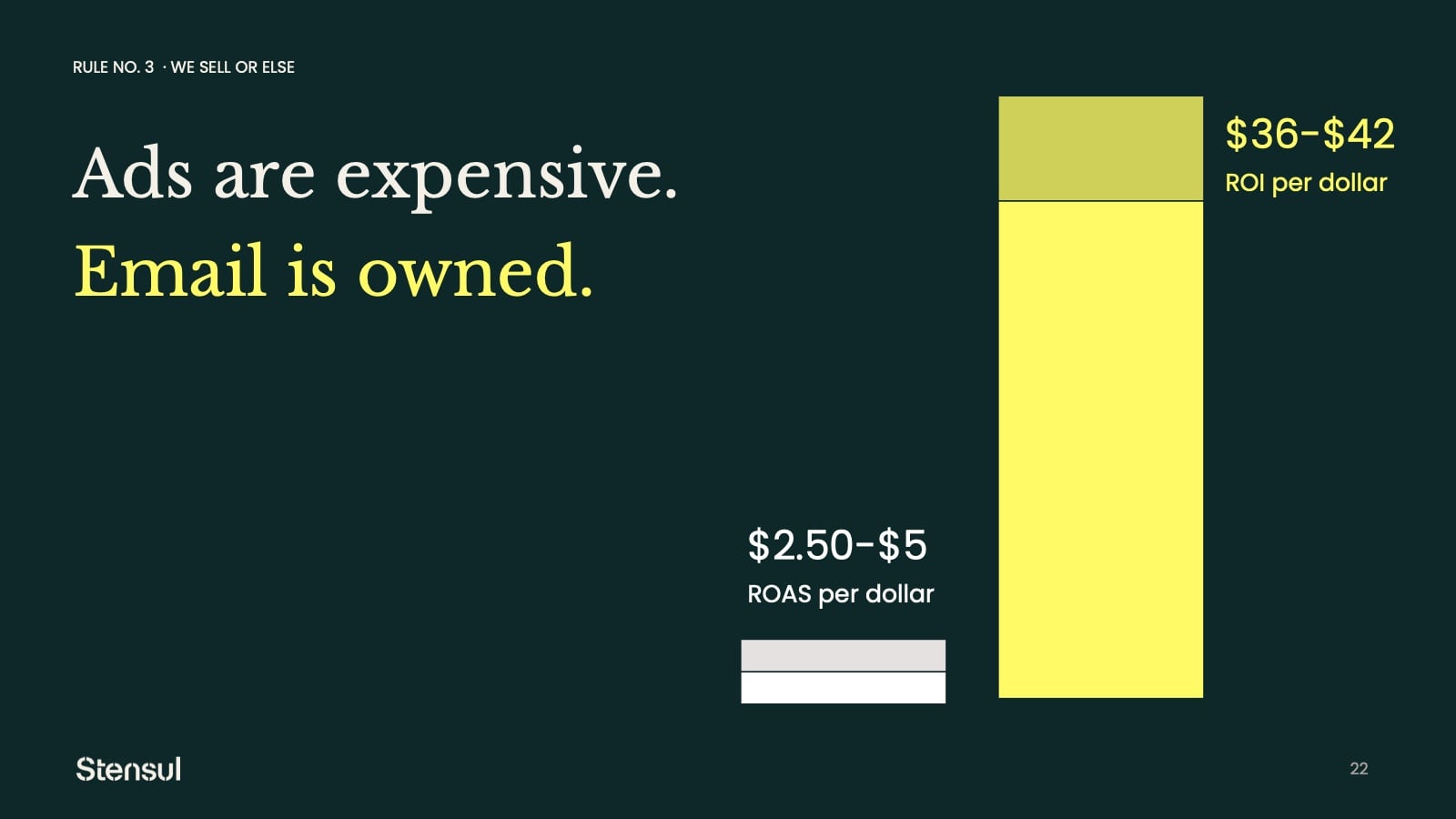
  22. Ads are expensive. Email is owned: email returns $36–$42 per dollar, against $2.50–$5 return on ad spend.
    22 / 43

    Unlike ads, where you pay the middle man, email is a direct line to your customers and their agents. PERSONALIZING email is a goldmine for sales.

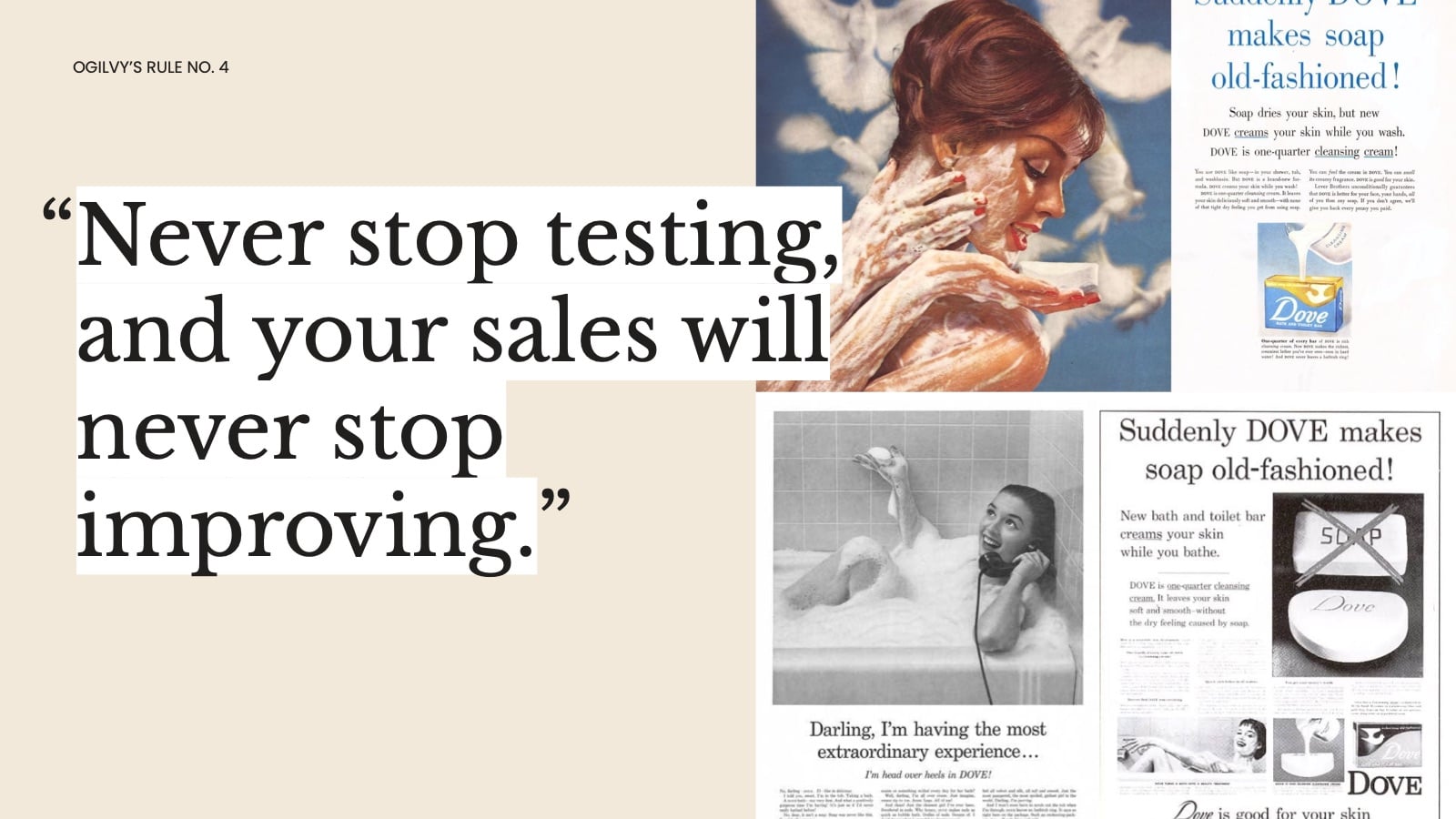
  23. Ogilvy’s rule no. 4: “Never stop testing, and your sales will never stop improving.” Ogilvy on Advertising, 1983. Beside Ogilvy’s Dove ads.
    23 / 43

    Rule number four. Never stop testing, and your sales will never stop improving.

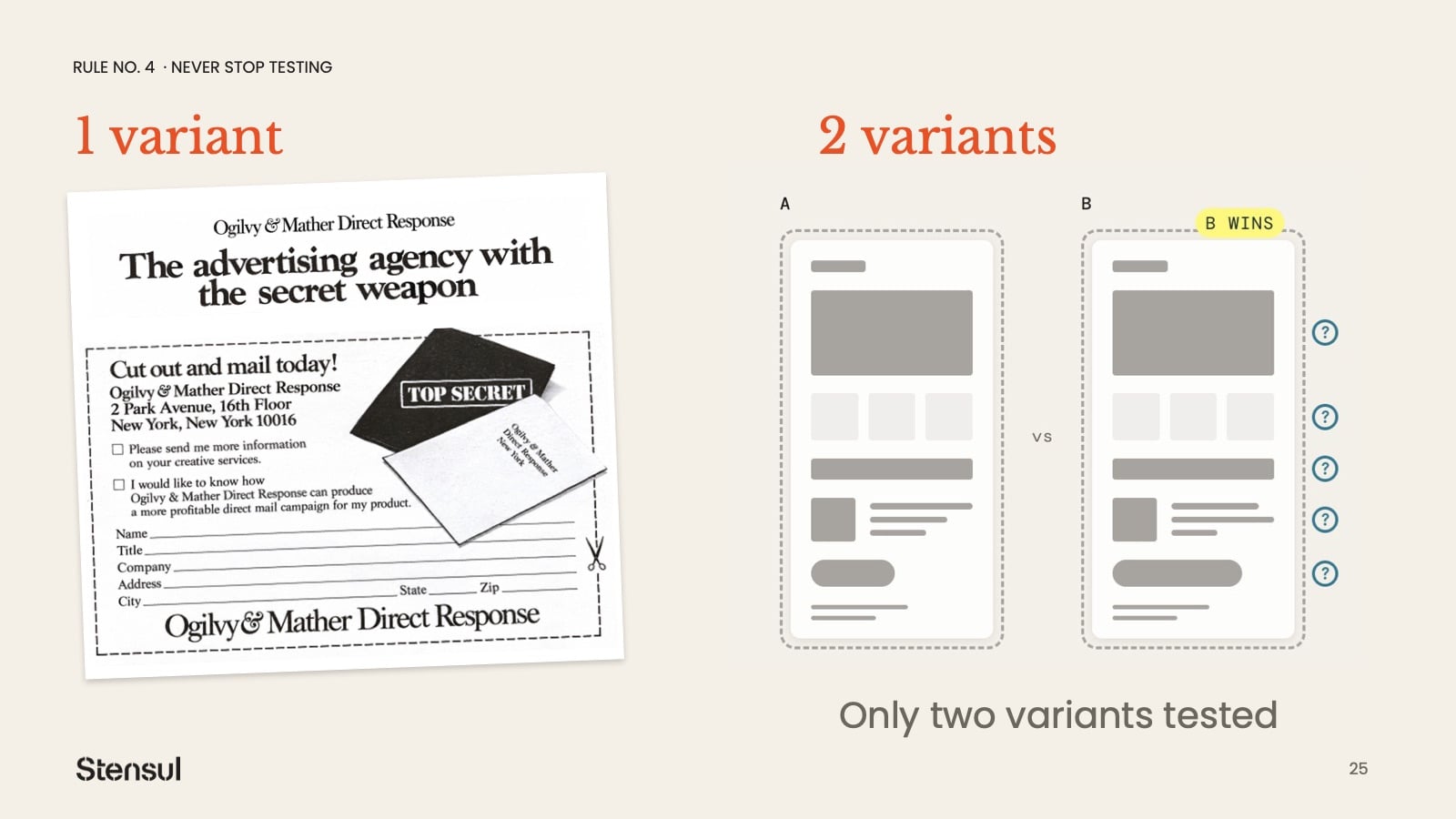
  24. Rule no. 4, never stop testing: 1 variant, Ogilvy’s direct-response ad with a coupon to cut out and mail back.
    24 / 43

    Ogilvy was obsessed with testing. His ads had response cards to mail back. He measured what worked.

  25. 1 variant beside 2 variants: an email A/B test today, with only two variants tested.
    25 / 43

    With email we’re stuck comparing subject headers once a quarter, and not connecting results back to content. That won’t win the inbox of the future!

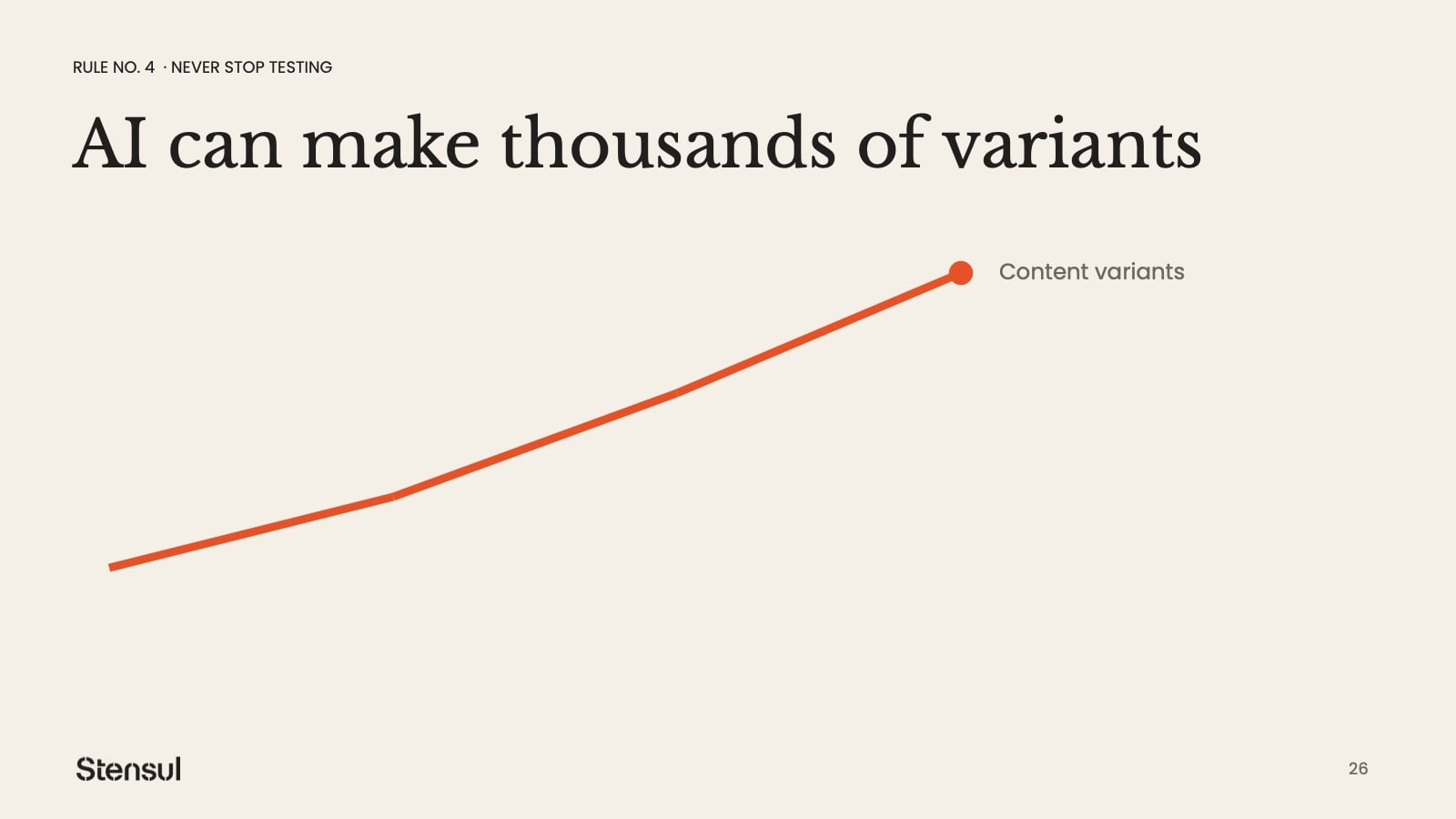
  26. AI can make thousands of variants: a line of content variants climbing steeply.
    26 / 43

    So how do we build everything I’ve talked about today? The good news is that the AI can help create personalized content.

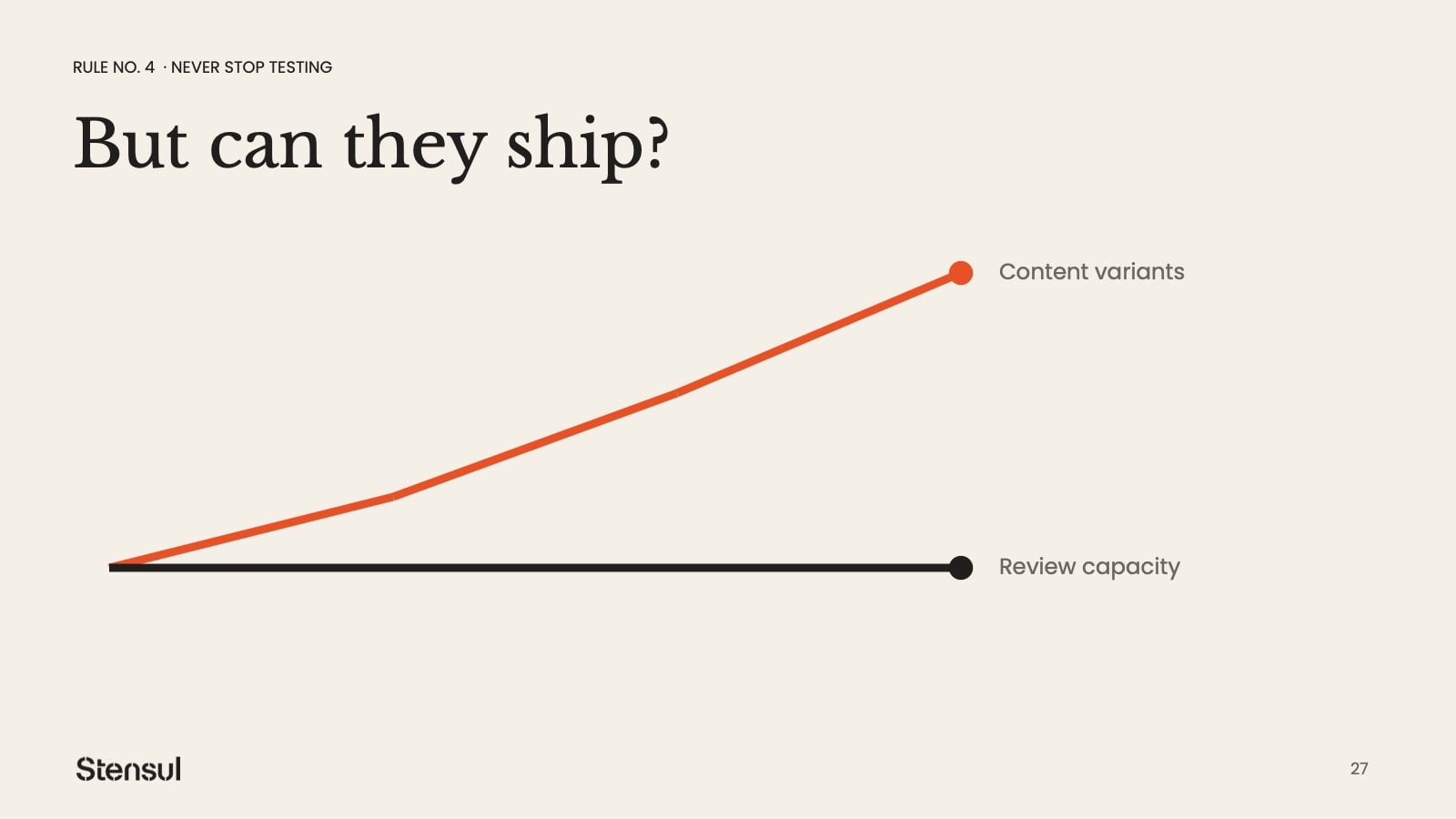
  27. But can they ship? Content variants climb while review capacity stays flat.
    27 / 43

    The problem is: the number of people who review and approve content is not growing. How do you tell if all that content is on-brand, compliant, and actually performing?

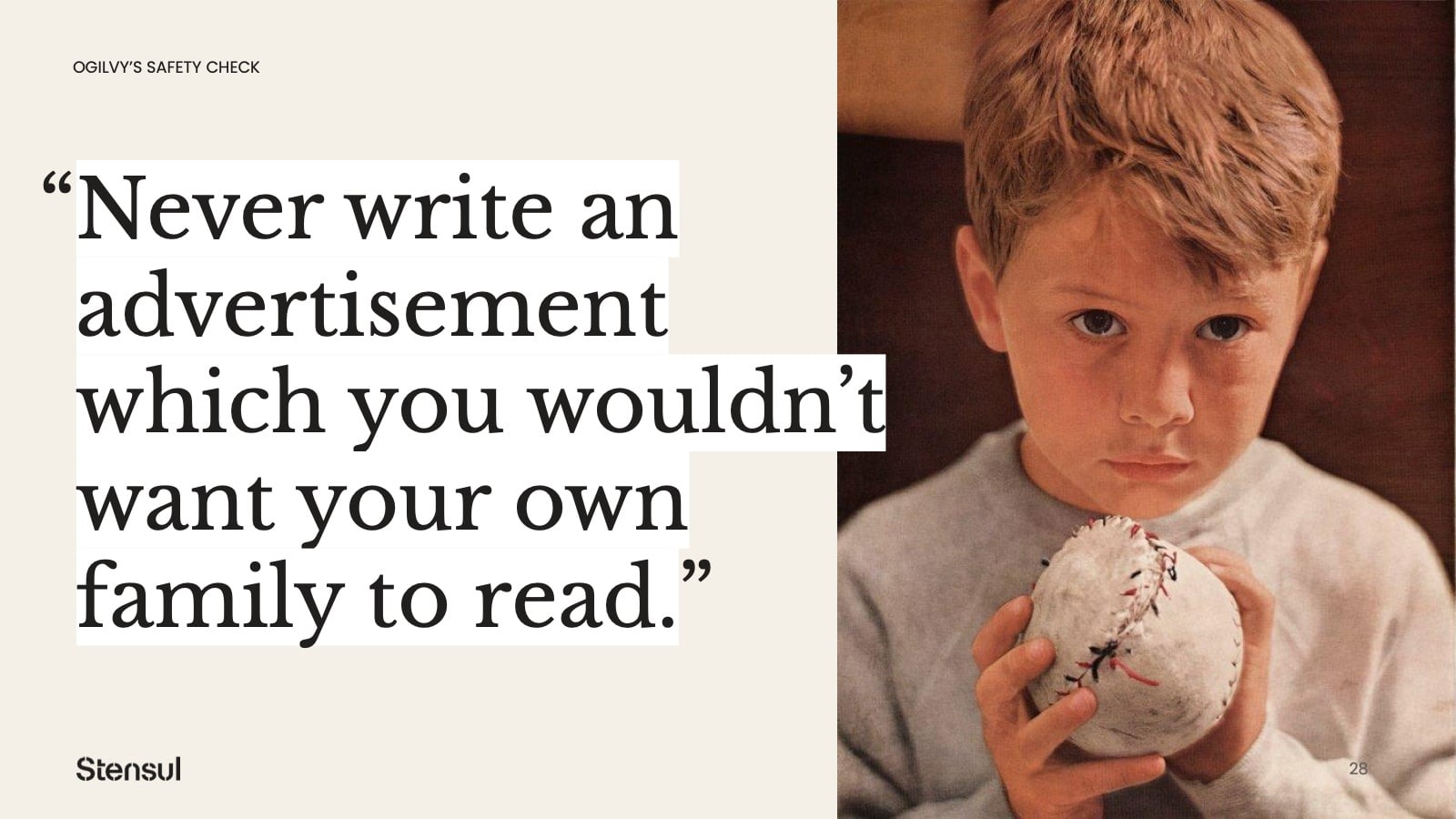
  28. Ogilvy’s safety check: “Never write an advertisement which you wouldn’t want your own family to read.” Beside a photo of a boy holding a baseball.
    28 / 43

    Ogilvy had a safety check for this. Never write an ad you wouldn’t want your own family to read. He could review every ad his agency made. But how about when AI makes thousands of variants?

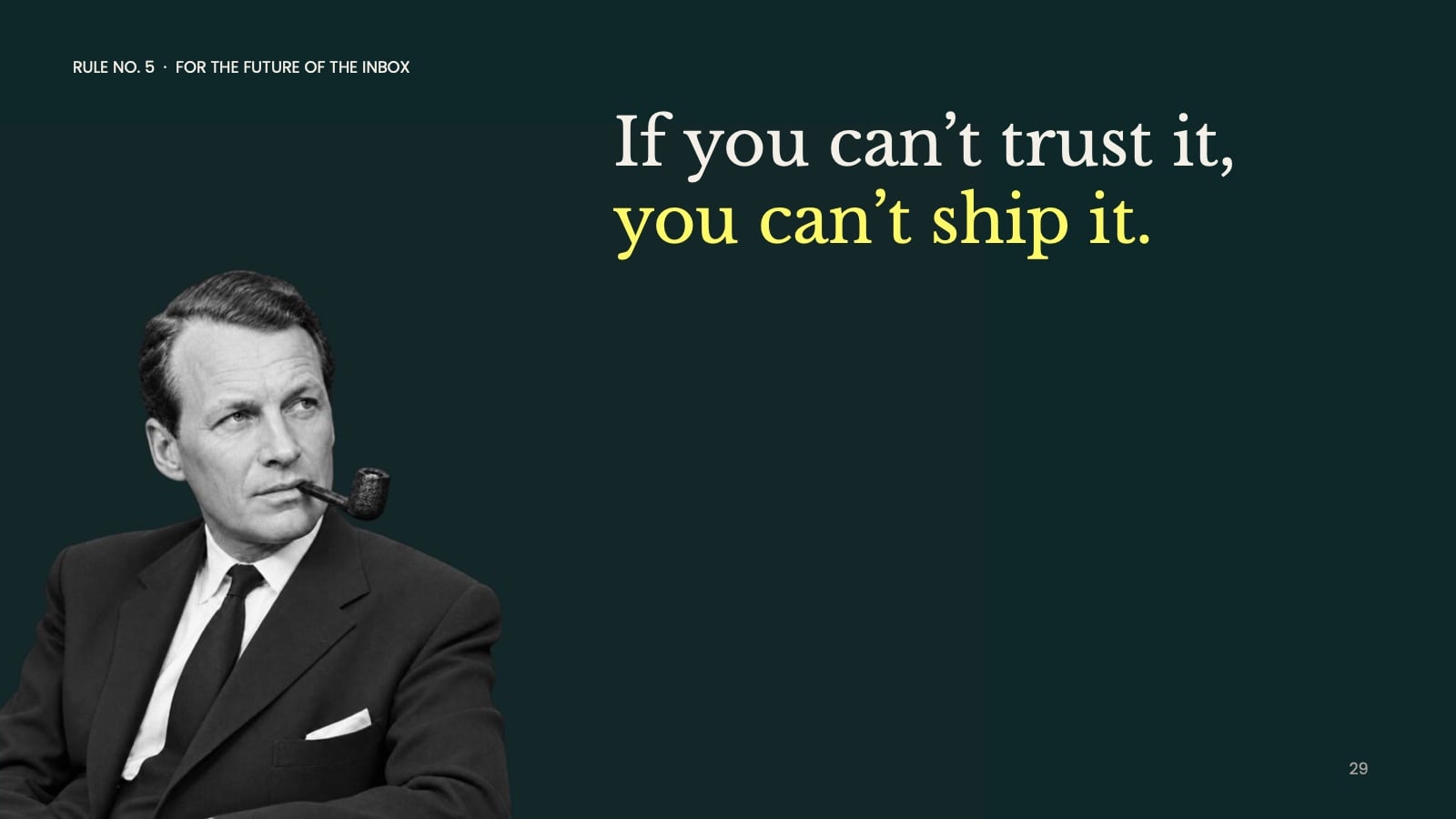
  29. Rule no. 5 for the future of the inbox: If you can’t trust it, you can’t ship it. Beside David Ogilvy.

    29 / 43

    We need a new rule: if you can’t trust it, you can’t ship it.
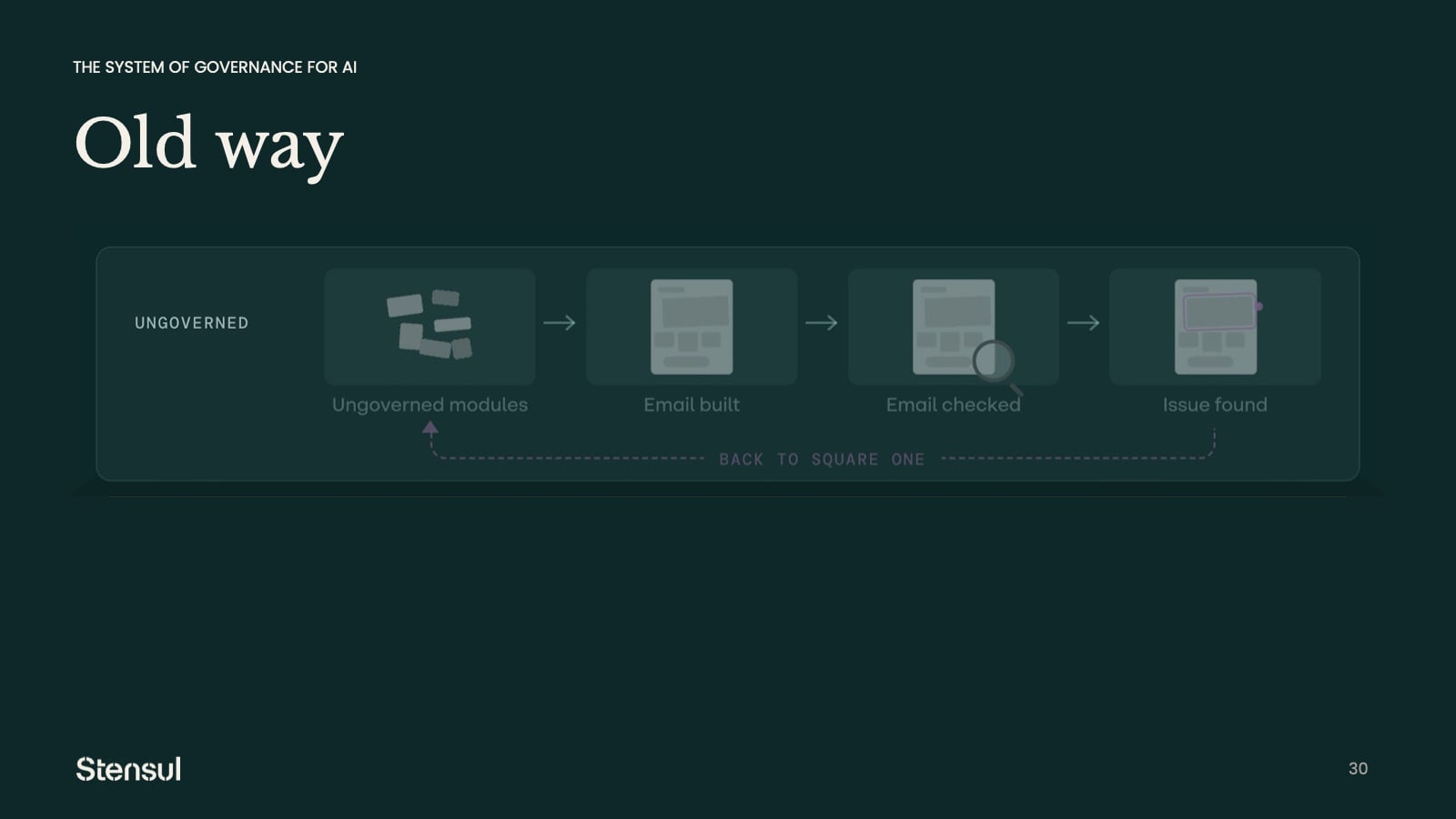
  30. The system of governance for AI, old way: ungoverned modules, email built, email checked, issue found, back to square one.
    30 / 43

    The old way put reviews and approvals at the end of the creation process. Go back to square 1 when there’s an issue. This won’t work with personalization at scale.

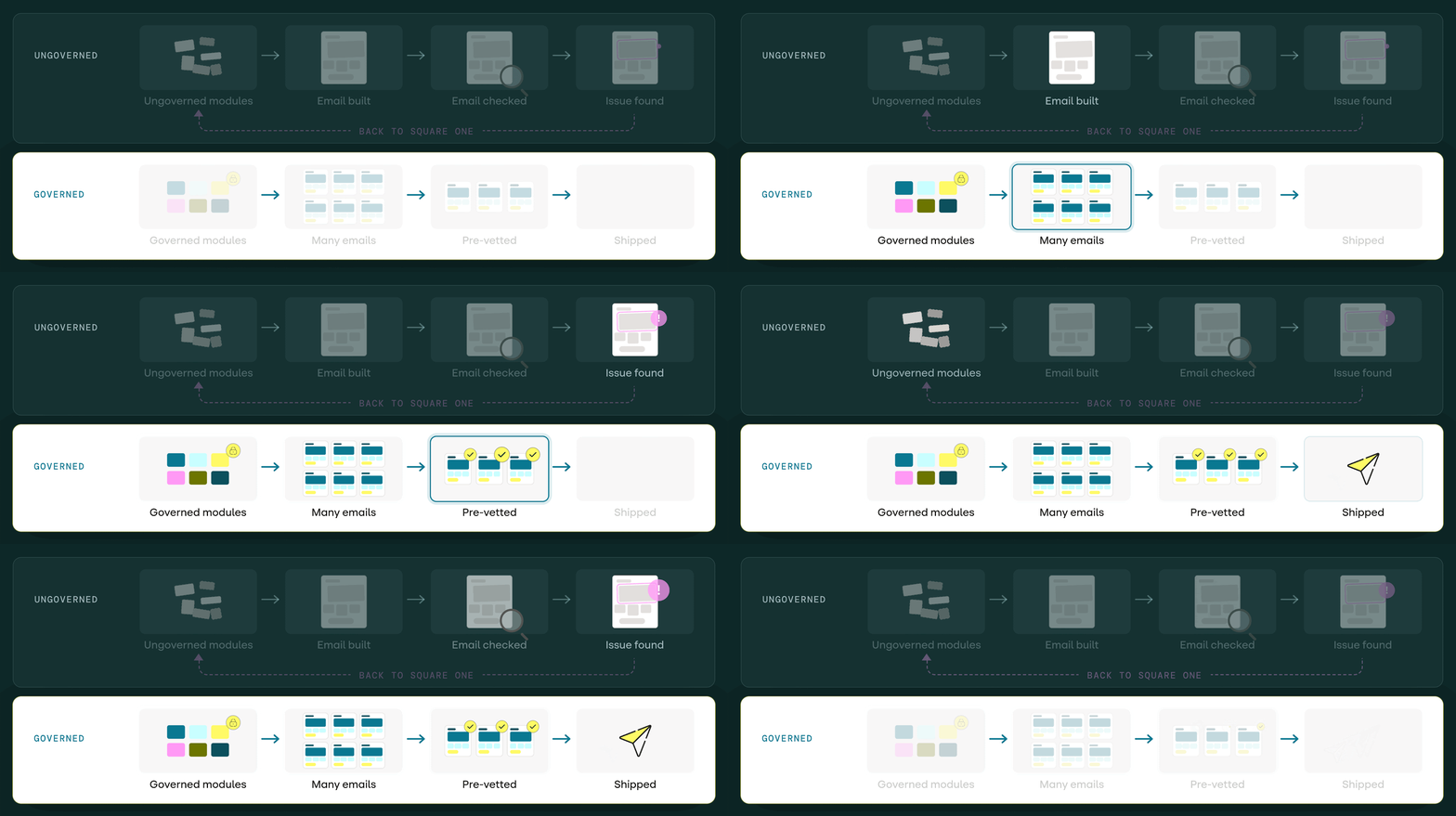
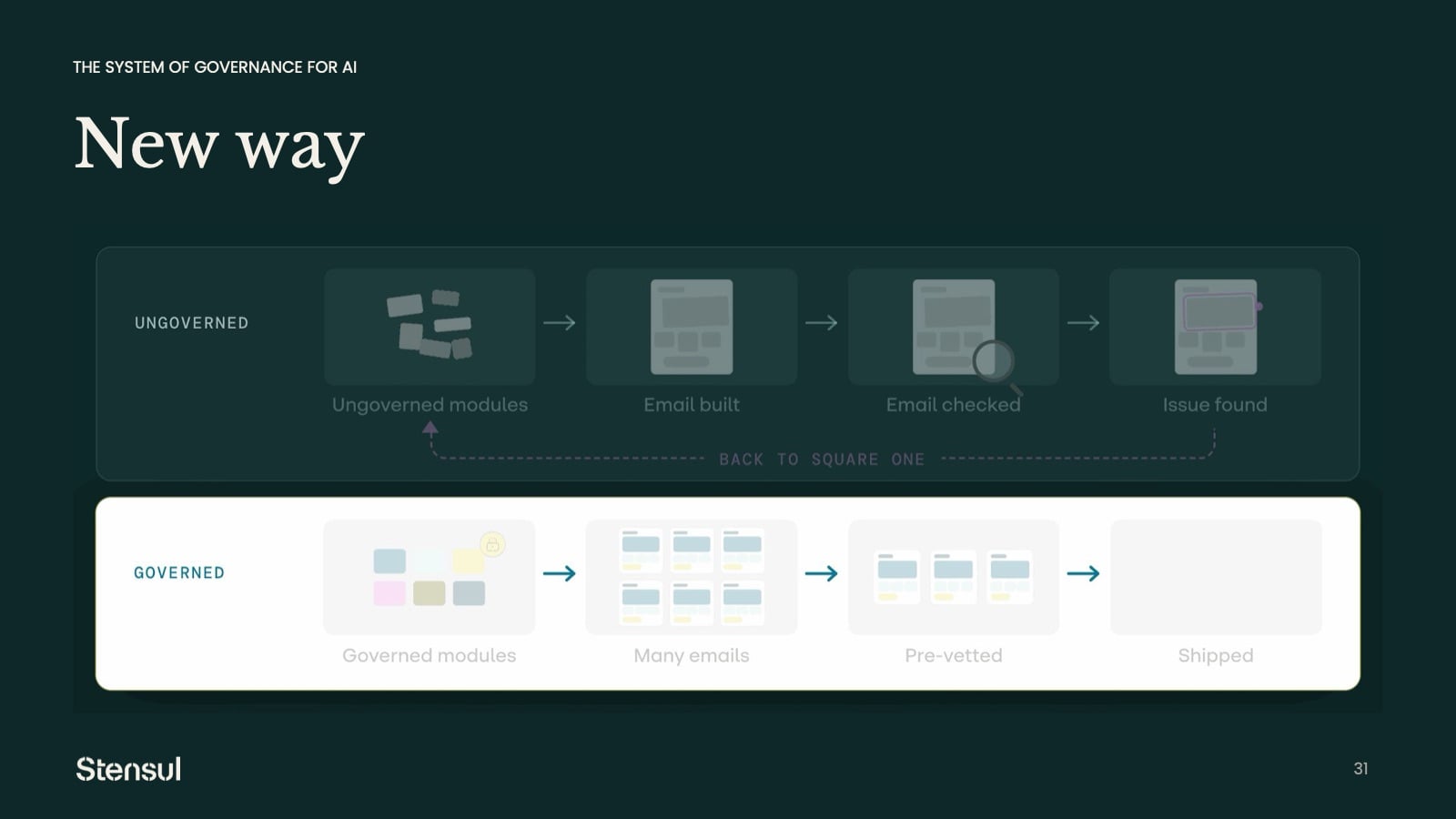
  31. New way: governed modules become many emails that are pre-vetted and shipped, below the old ungoverned loop.
    31 / 43

    The better approach is: set the content rules for agents and people at the START, then carry them all the way through the production process.

  32. A system of governance: what a system of governance needs.
    32 / 43

    What does that system look like?

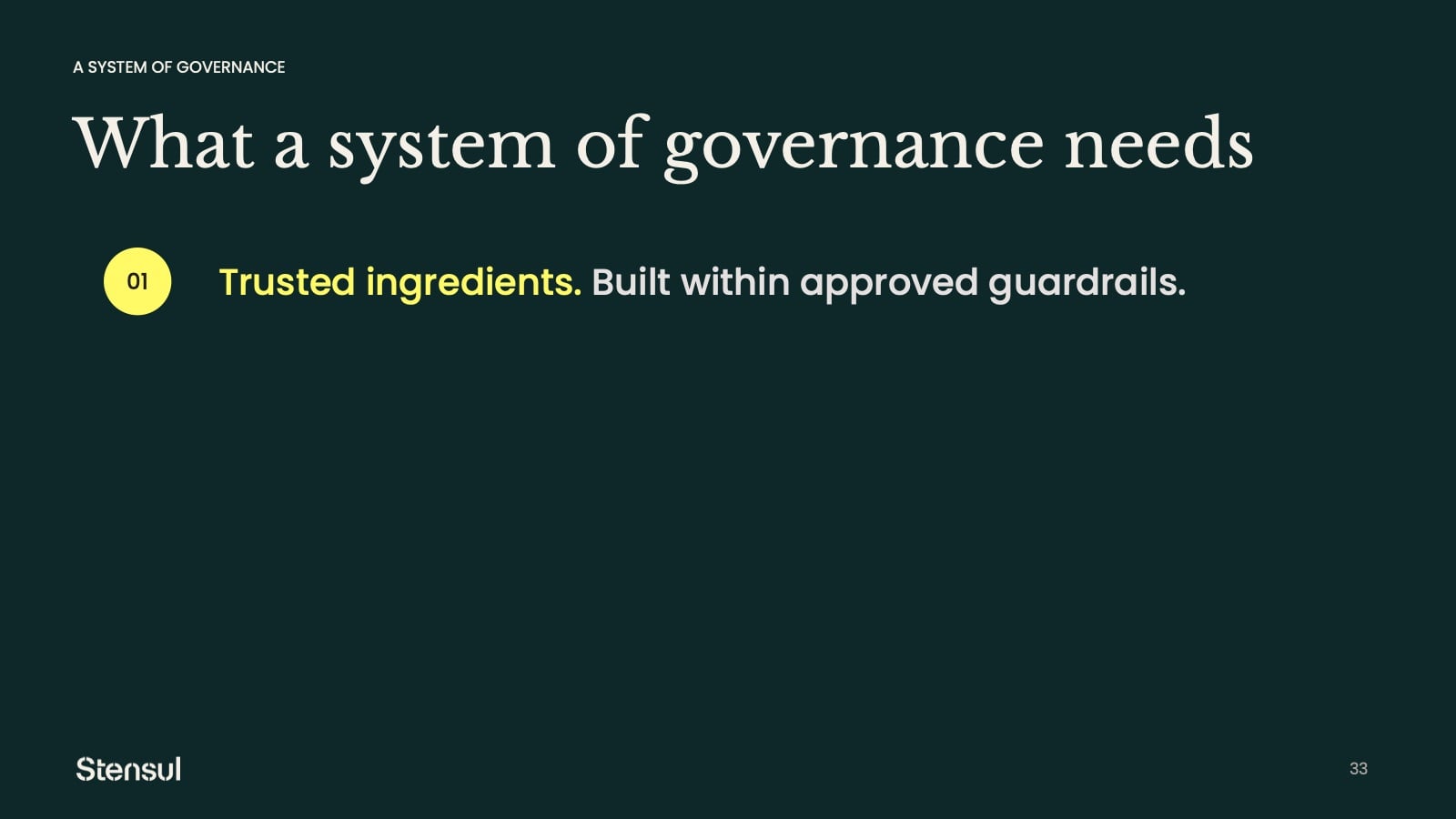
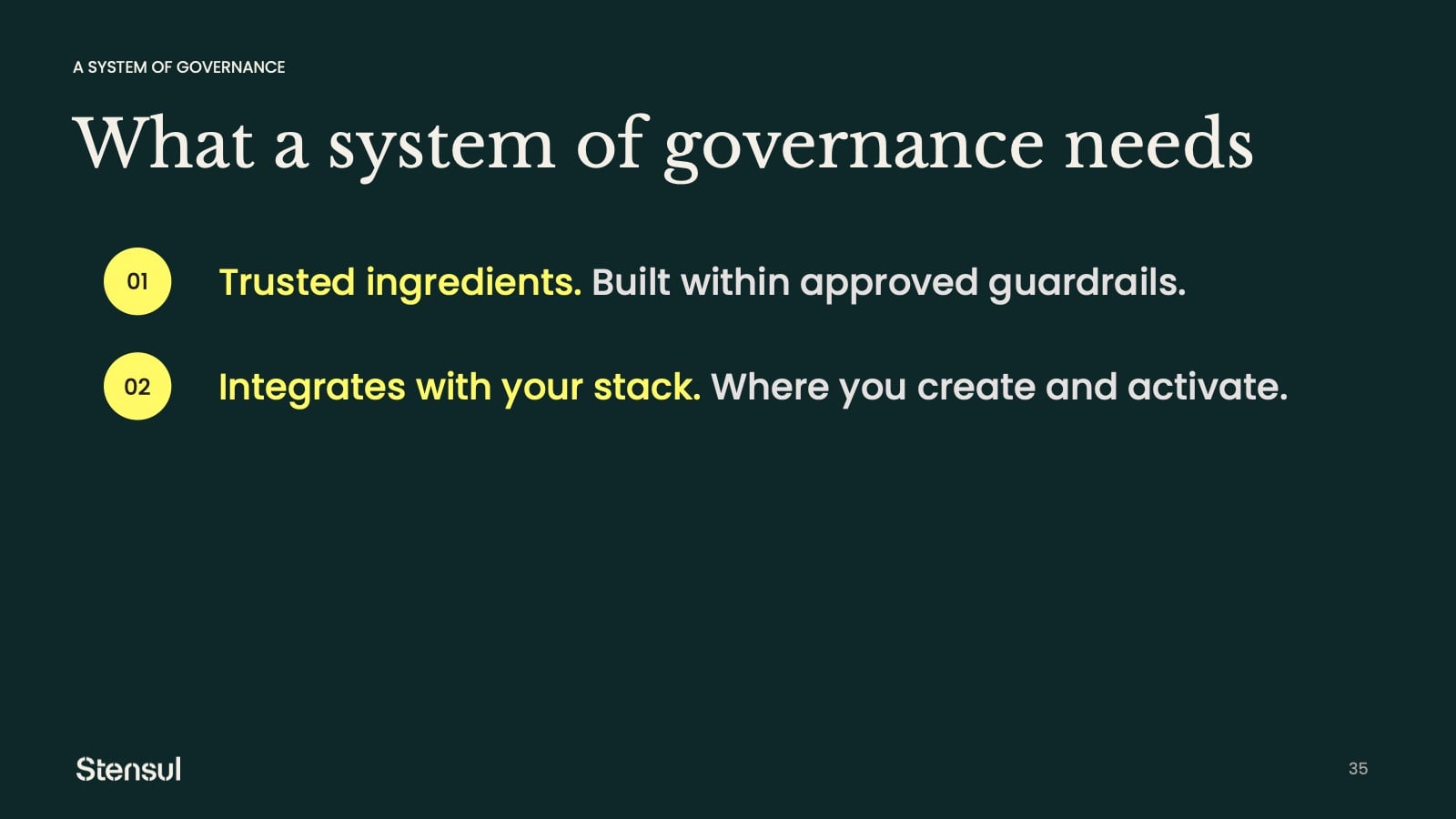
  33. What a system of governance needs: 01, trusted ingredients, built within approved guardrails.
    33 / 43

    One. Content is created and assembled based on the brand, compliance, and performance guardrails you establish.

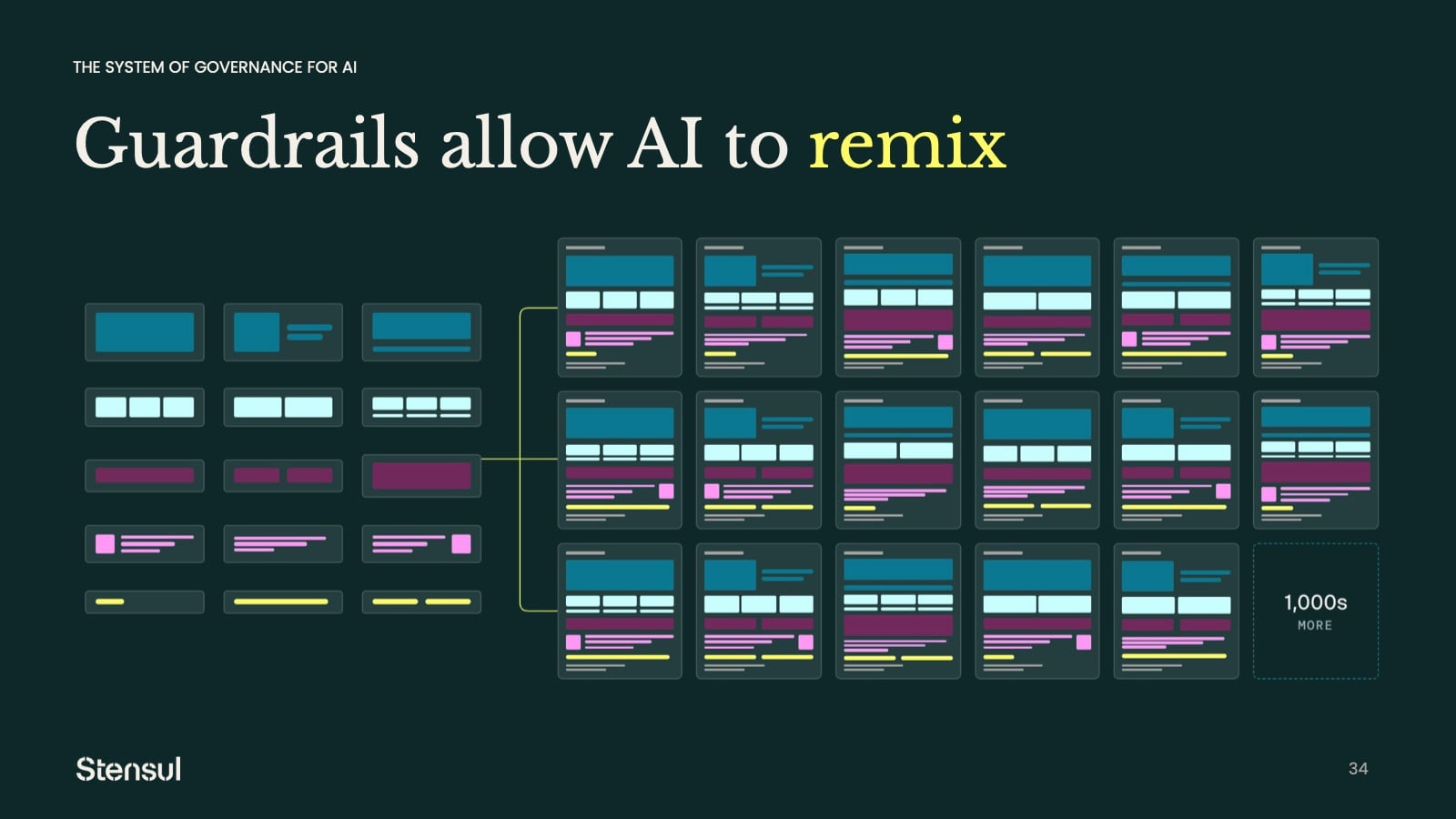
  34. Guardrails allow AI to remix: a handful of approved modules become thousands of email variants.
    34 / 43

    When you have those guardrails, AI can remix and personalize – it keeps content safe to ship, while you also scale your campaigns.

  35. What a system of governance needs: 01, trusted ingredients. 02, integrates with your stack, where you create and activate.
    35 / 43

    Two. It works with the tools your AGENTS and your people already use to create and activate content.

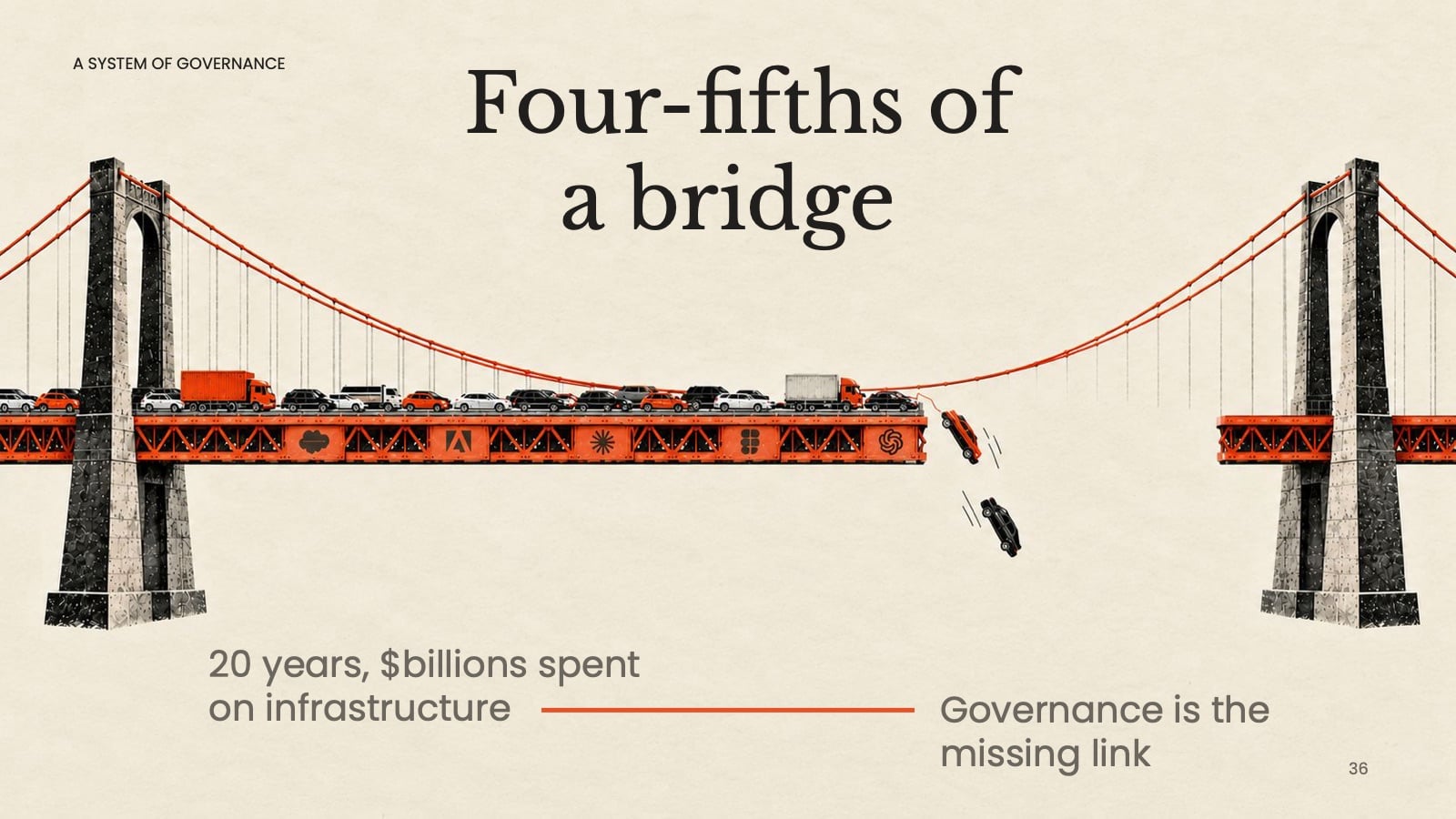
  36. Four-fifths of a bridge: 20 years and billions spent on infrastructure, with governance as the missing link.
    36 / 43

    Think of it as finishing the last link in the bridge you’ve already invested in with Adobe, Salesforce, your AI tools…

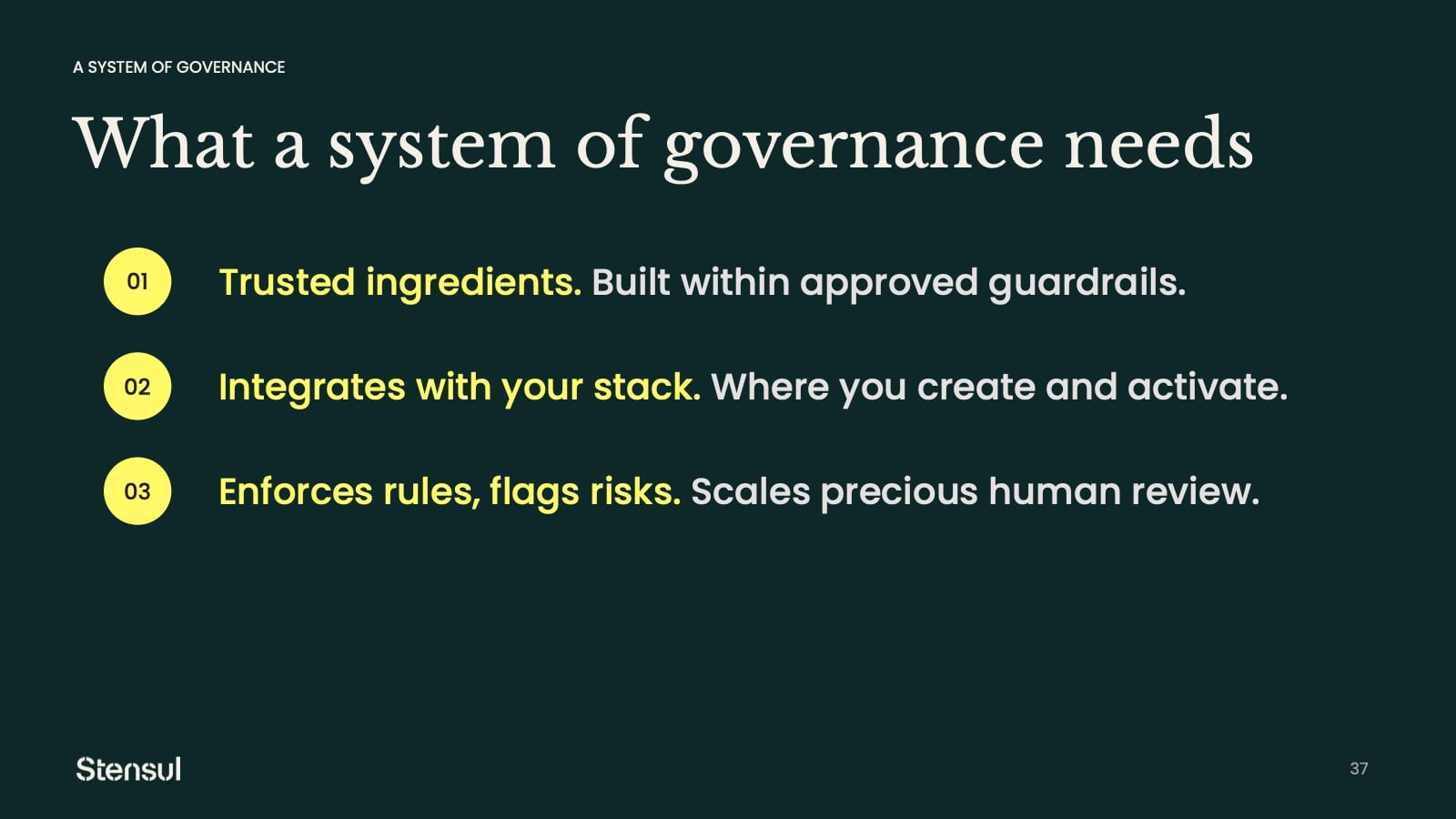
  37. What a system of governance needs: 01, trusted ingredients. 02, integrates with your stack. 03, enforces rules and flags risks, scaling precious human review.
    37 / 43

    Three, it enforces the rules and flags the risks for you.

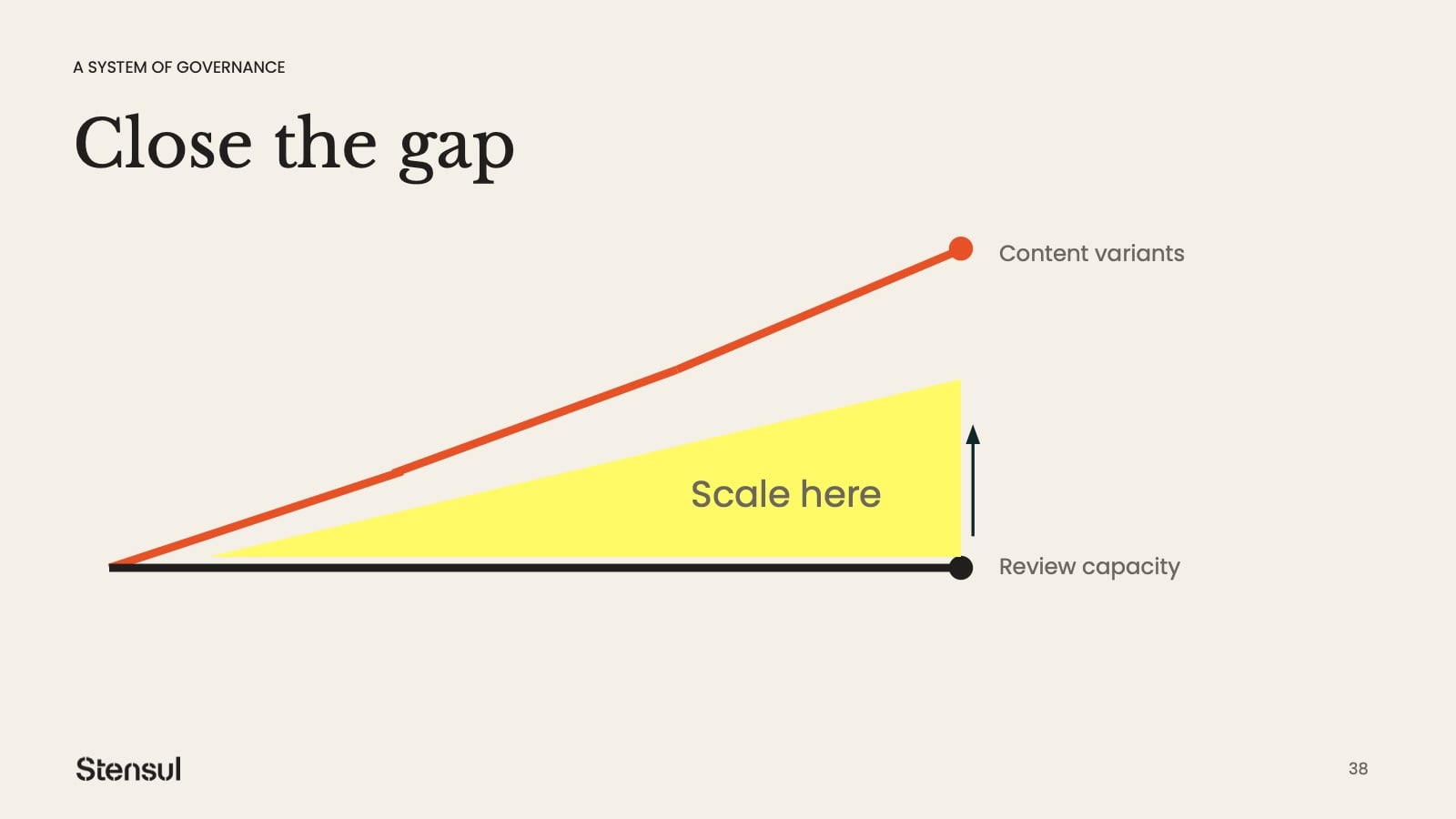
  38. Close the gap: governance lifts review capacity toward the line of content variants.
    38 / 43

    That way you can scale review capacity – but not the people and costs – as you get closer to 1-to-1 personalization.

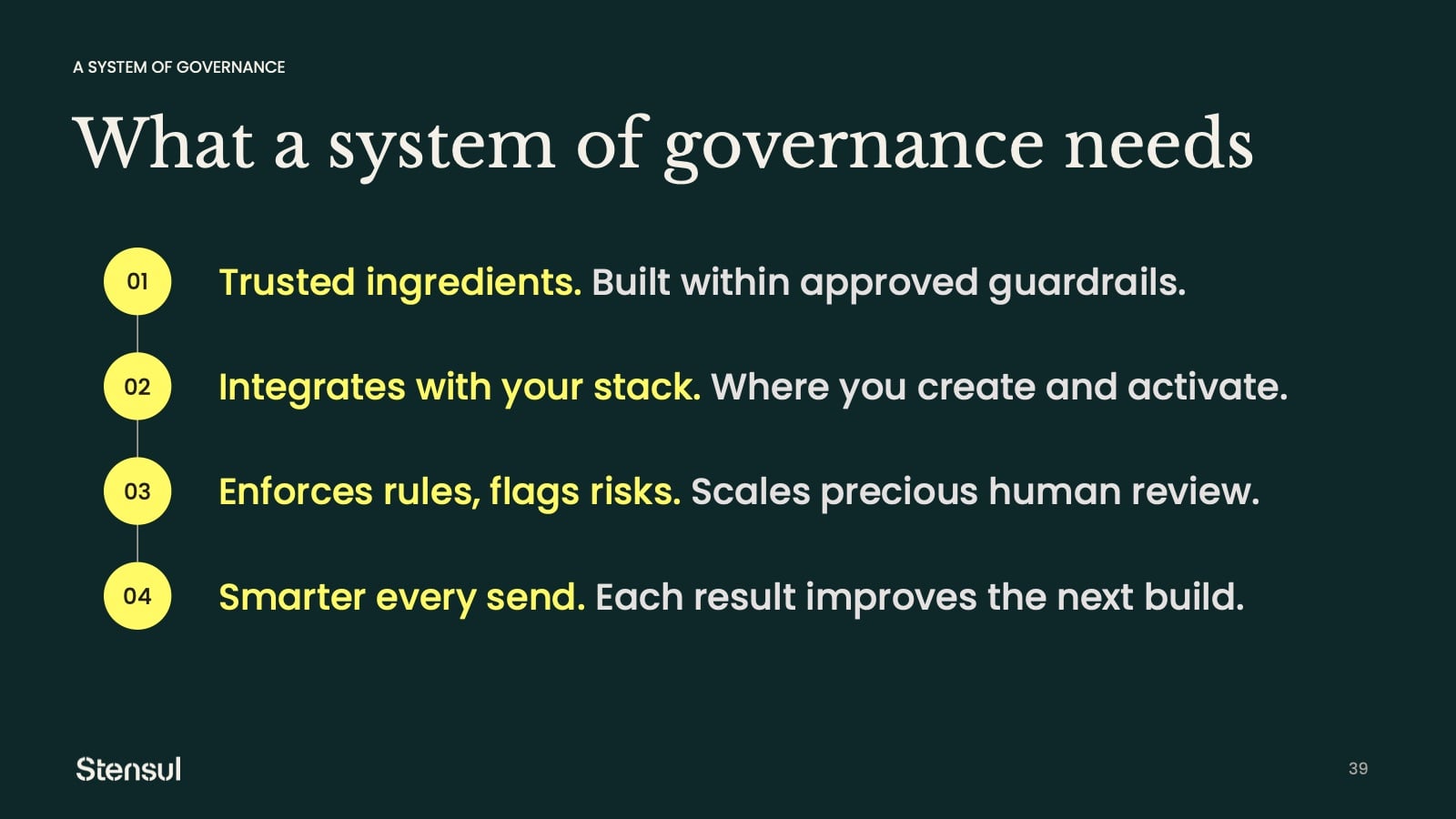
  39. What a system of governance needs: 01, trusted ingredients. 02, integrates with your stack. 03, enforces rules, flags risks. 04, smarter every send: each result improves the next build.
    39 / 43

    And Four, What you learn from one email’s performance and review, automatically improves the next. It gets smarter every send.

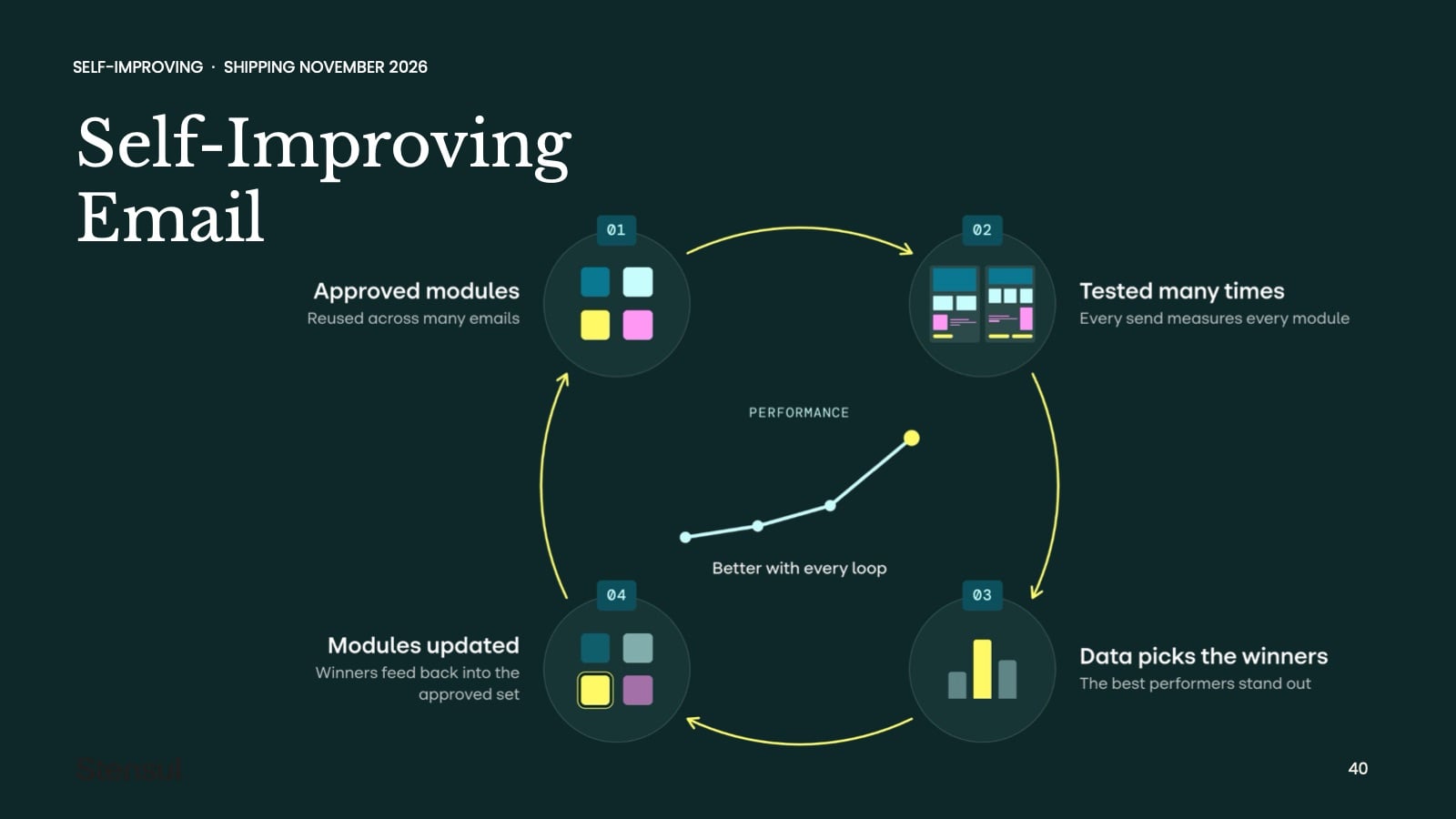
  40. Self-Improving Email, shipping November 2026: approved modules are tested many times, data picks the winners, and the modules are updated, better with every loop.
    40 / 43

    In fact, we just debuted this capability at Stensul. We bring this and the broader governance system I talked about today to life for the biggest brands in the world.

  41. Photo of David Ogilvy with his pipe.
    41 / 43

    I think Ogilvy would love this new phase of marketing.

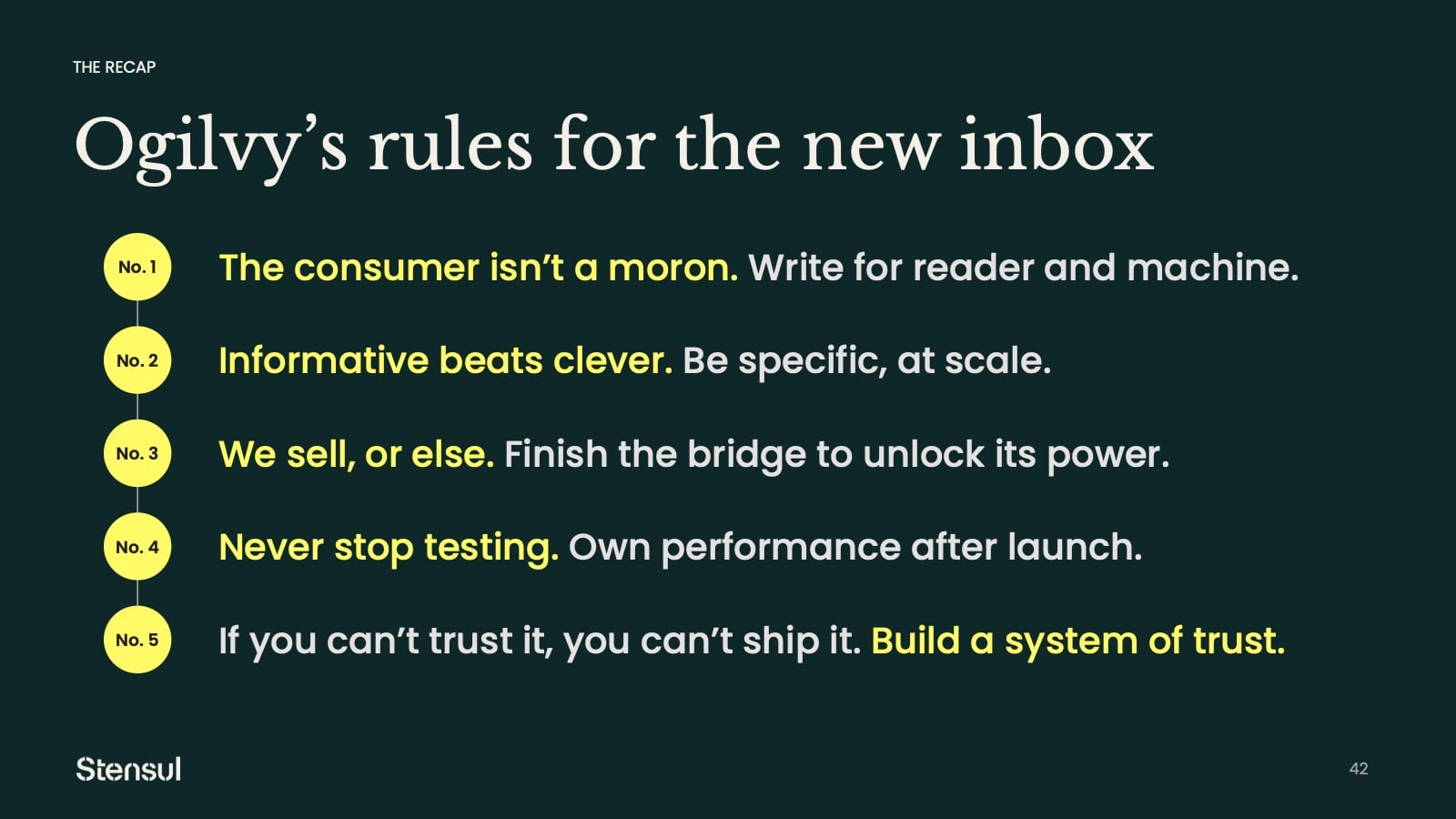
  42. The recap, Ogilvy’s rules for the new inbox: 1, the consumer isn’t a moron: write for reader and machine. 2, informative beats clever: be specific, at scale. 3, we sell, or else: finish the bridge to unlock its power. 4, never stop testing: own performance after launch. 5, if you can’t trust it, you can’t ship it: build a system of trust.
    42 / 43

    We should follow his rules – but now we can follow them for every single customer. AI can make the content. Martech can build the system that makes it safe and practical.

  43. Personal is now practical. What is stopping you from shipping email at AI scale? Email Manlio Carrelli, CEO: manlio.carrelli@stensul.com.
    43 / 43

    The question I’ll leave you with: what’s stopping you from shipping personal email at scale? I’m happy to talk that through – my contact info is up there. Thank you.

What is the talk about?

AI now sits between brands and their customers’ inboxes. Gmail and Apple Mail summarize email before anyone opens it, people buy straight from those previews, and agents read email and act on it for their owners. Manlio Carrelli, Stensul’s CEO, asks what won’t change, and answers with David Ogilvy, who called direct mail his “first love and secret weapon”.

What are Ogilvy’s rules for the AI inbox?

  1. The consumer isn’t a moron. Write for the reader and for the agent that reads on their behalf.
  2. Informative beats clever. Be specific, at scale: the bill is already a 1:1 email.
  3. We sell, or else. Email is owned and AI-native, so it is where AI-driven sales can be won.
  4. Never stop testing. Own performance after launch, not one subject-line test a quarter.
  5. If you can’t trust it, you can’t ship it. The new rule: build a system of trust.
What does a system of governance need?

AI can make thousands of email variants, but review capacity isn’t growing. Carrelli names four things a system of governance needs to close that gap: trusted ingredients built within approved guardrails, a fit with the stack where teams create and activate, rules enforced and risks flagged so human review scales, and results from each send that improve the next build.
Topics: AI & agents, Personalization, Brand governance

Make the move to agentic AI for email marketing.

We’ll show you how large enterprises are using Stensul to adapt their AI operating model, and ship more campaigns, with better results.

Request a demo